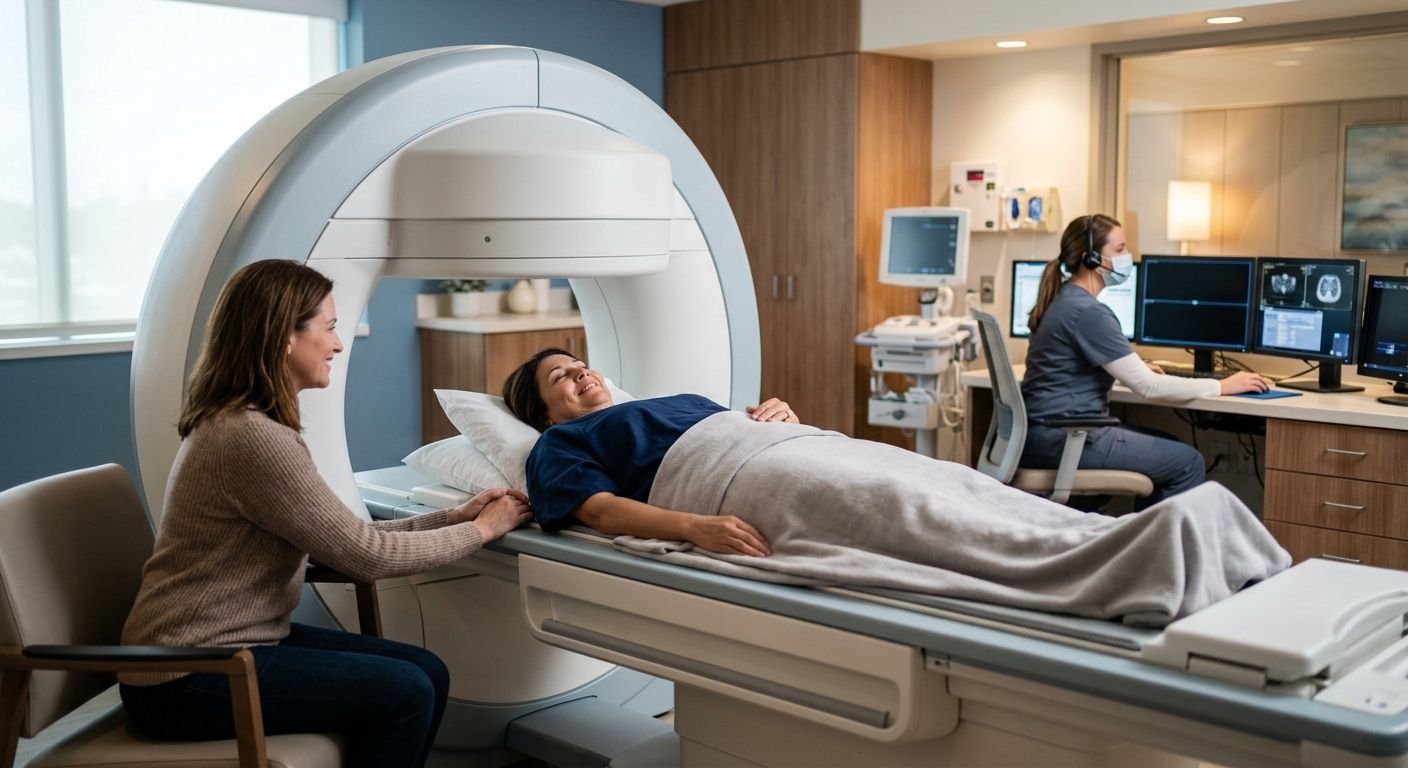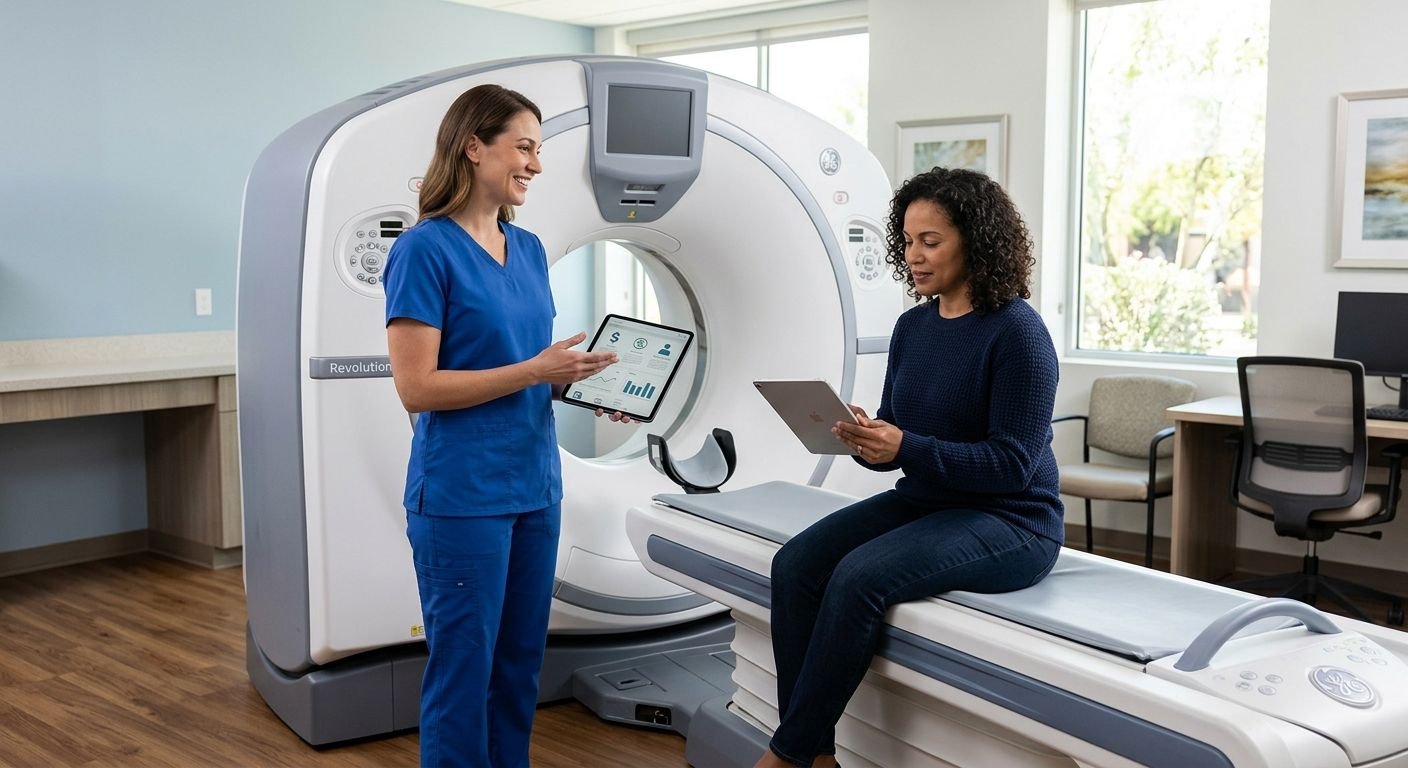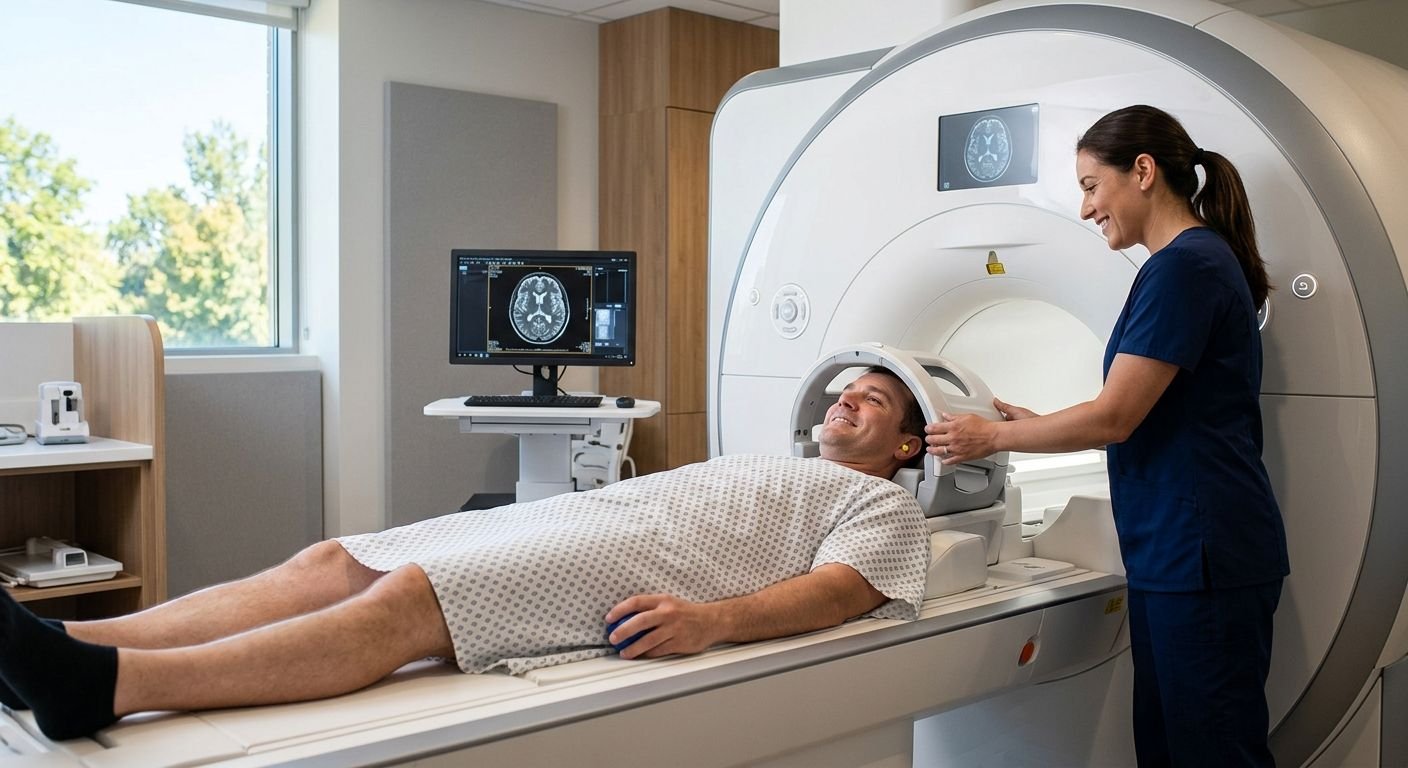
Imaging Tests for Prostate Cancer: A Comprehensive Guide for Patients
Table of Contents Understanding Imaging Tests for Prostate Cancer The Role of Imaging in Prostate Cancer Diagnosis What an MRI Shows for Prostate Cancer CT Scans and Other Imaging Modalities for Prostate Evaluation Preparing for Your Prostate Imaging Exam Interpreting Your Imaging Results and Next Steps Your Path to Clear Prostate Health with Arizona Advanced Imaging Understanding Imaging Tests for Prostate Cancer Imaging tests for prostate cancer encompass MRI, CT, ultrasound, and nuclear medicine scans that detect tumors, determine cancer stage, and monitor treatment response. These noninvasive exams show the tumor’s location, size, and whether it has spread beyond the prostate, forming the basis for personalized treatment planning. We coordinate with referring physicians to integrate images into individualized care plans. Accurate imaging guides biopsies to suspicious areas and helps physicians select the most effective intervention, whether active surveillance, surgery, or radiation. This detailed information allows oncologists to tailor treatments with greater confidence, directly impacting patient outcomes. Timely, high-quality imaging reduces repeat exams and helps patients begin appropriate care sooner. At our imaging centers, we use advanced technology to deliver precise results that support both clinical decision-making and patient peace of mind. Key Takeaways The Role of Imaging in Prostate Cancer Diagnosis Imaging has become indispensable in the evaluation of patients with prostate cancer, particularly in elucidating information that is not obtainable by physical examination. There have been numerous advances in prostate imaging, and it is the particular role (i.e. in the detection, staging and biopsy guidance) that enhances the clinical utility of an imaging modality. The role of imaging in the workup of the patient with elevated PSA or abnormal digital rectal examination (DRE) is critical. When a patient presents with an elevated prostate-specific antigen (PSA) level or an abnormal digital rectal examination, imaging helps identify suspicious areas within the prostate that warrant closer investigation. In the absence of imaging, the clinician may not identify prostate cancer that is hidden by normal structures. Beyond detection, imaging is crucial in staging prostate cancer. For instance, imaging helps determine the extent to which prostate cancer has spread to surrounding tissues and whether it has reached lymph nodes or other organs. Imaging results help in determining the overall treatment plan for the patient. Imaging also transforms how prostate biopsies are performed. Rather than relying solely on systematic, random sampling of the prostate, physicians can use image-guided techniques to direct the biopsy needle to the most suspicious locations. This targeted, image-guided approach improves the precision of tissue sampling and increases the likelihood of capturing clinically significant cancer on the first attempt. Taken together, imaging results inform the collaborative decisions that urologists and oncologists make with their patients. The findings help determine whether a plan of active surveillance, surgery, or other management strategies is appropriate, though imaging alone never replaces a thorough clinical evaluation or the definitive information provided by a tissue biopsy. It is a powerful tool, but always a part of a larger diagnostic process. One of the most influential imaging tools in this pathway is magnetic resonance imaging (MRI), which offers detailed soft-tissue visualization of the prostate and surrounding structures. As your trusted radiology partner, we deliver the high-quality MRI and supporting imaging services that healthcare teams rely on when navigating these complex diagnostic decisions. What an MRI Shows for Prostate Cancer Prostate MRI provides high-resolution anatomical detail that helps physicians detect suspicious lesions and assess the likelihood of clinically significant prostate cancer. This advanced imaging tool plays a central role in evaluating the prostate gland, local staging of known cancer, monitoring treatment effectiveness, and checking for recurrence. Central to prostate MRI interpretation is the Prostate Imaging Reporting and Data System, or PI-RADS, a standardized 5-point scoring method that communicates the probability that a finding represents clinically significant cancer. According to the Radiological Society of North America’s patient education resource, RadiologyInfo.org, PI-RADS categories range from very low to very high likelihood of clinically significant prostate cancer. A PI-RADS 1 score indicates a very low likelihood, while PI-RADS 2 reflects a low likelihood. PI-RADS 3 represents an intermediate or undetermined probability. PI-RADS 4 indicates a high likelihood, and PI-RADS 5 signals a very high likelihood of clinically significant cancer. These scores guide referring physicians but do not provide a definitive diagnosis — they are interpreted alongside other clinical information such as PSA levels, patient history, and biopsy results. PI-RADS 1–5 scoring system for prostate cancer MRI assessment. A standard prostate MRI report typically includes several key sections: the exam type, clinical history, technical details about the imaging process, the radiologist’s findings, and a final impression. The Impression section is particularly critical because it synthesizes the most significant observations for the referring physician, integrating MRI results with the patient’s broader clinical picture. RadiologyInfo.org emphasizes that this section distills what matters most for next steps, including any recommended follow-up imaging or biopsy correlation. Understanding the report structure can help patients have conversations with their healthcare providers about what an MRI shows for prostate cancer and how those findings shape the path forward. In addition to MRI, other imaging modalities such as CT scans may be used for a fuller picture when evaluating prostate cancer, particularly in assessing whether disease has spread beyond the prostate. Your health and clarity are our priority, and we are committed to producing precise, timely reports that support both clinical care and informed patient discussions. CT Scans and Other Imaging Modalities for Prostate Evaluation Comprehensive prostate cancer evaluation frequently combines different imaging methods, each answering a distinct clinical question. CT scans serve a critical role in detecting lymph node involvement and distant metastases, complementing the detailed soft-tissue visualization that MRI provides for the prostate itself. When a prostate cancer diagnosis is suspected or confirmed, physicians often rely on CT for whole-body staging to decide whether additional interventions are necessary. CT imaging uses a rotating X-ray source to capture cross-sectional images of the chest, abdomen, and pelvis. This wide anatomical coverage is ideal for identifying enlarged lymph nodes, bone metastases, and