AZ & TX Advanced Imaging

MRI & CT Scans

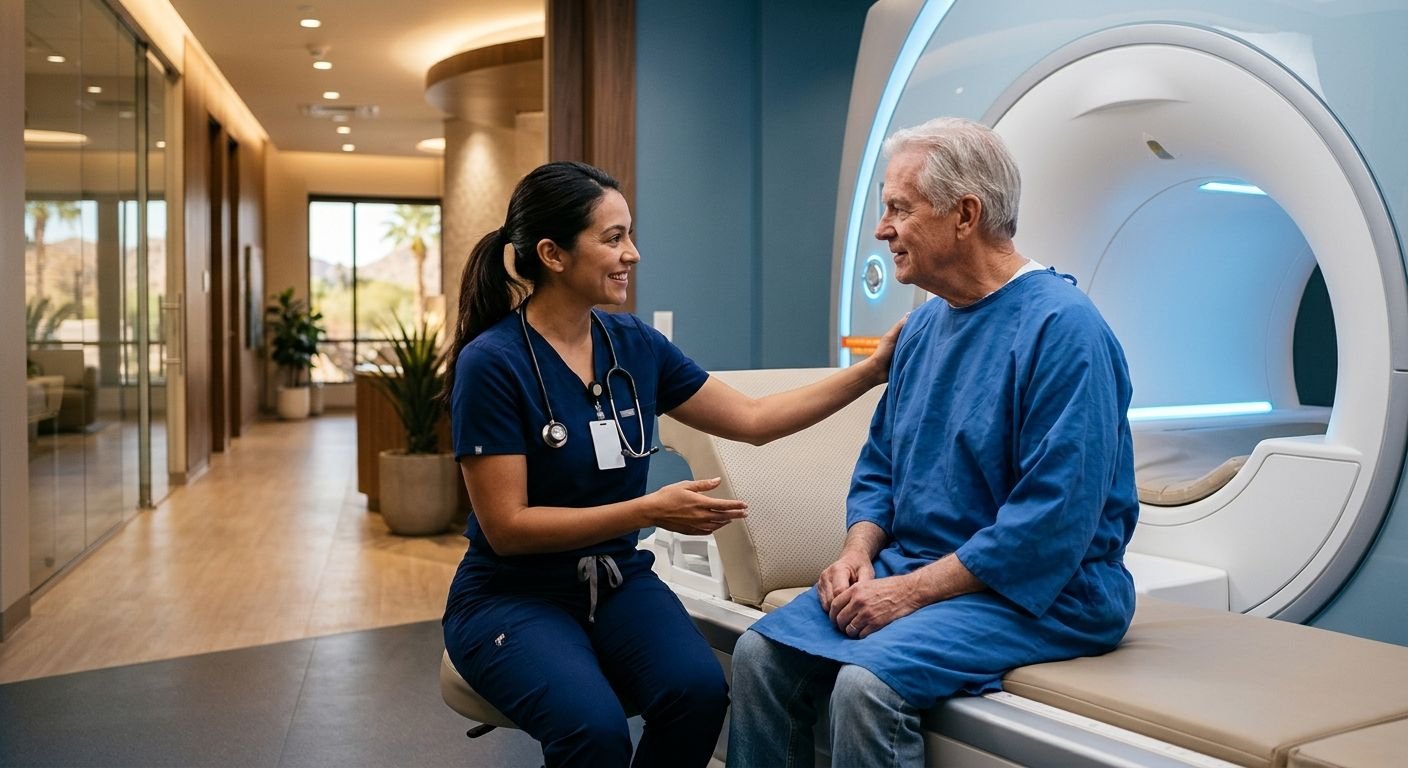
Compassionate radiologist explaining open MRI procedure to patient in calming blue-toned imaging center
Diagnostic Imaging, MRI & CT Scans, Patient Education

Imaging Tests for Muscle Symptoms: Questions for Patients

Muscle pain, weakness or injury can have different causes. A clinical assessment helps determine whether imaging is useful and which examination addresses the question. In this article Match the modality to the concern Confirm the examination and interpretation Choose a scanner for the ordered exam Arrange the examination before arriving Plan for results and follow-up Match the modality to the concern MRI, ultrasound, CT and X-ray provide different information. The choice depends on the body area, symptoms and clinical findings; no single modality is the best test for all muscle complaints. Musculoskeletal ultrasound can examine selected accessible soft tissues and movement, while depth and bone limit what it can show. The treating clinician may request another examination when a different view is needed. Confirm the examination and interpretation Ask whether the selected center offers the exact protocol, including any dynamic ultrasound requested. If specialist interpretation is important, confirm how it will be arranged rather than assuming every examination receives the same subspecialty review. Choose a scanner for the ordered exam Open-sided MRI and a wider-bore enclosed scanner are different designs. Comfort, field strength and exam capability should be discussed separately; one design is not automatically the best choice for every clinical question. Confirm the scanner available at the specific center, the ordered protocol and patient-size limits before booking. A network-wide reference to open MRI does not mean every location has that equipment. Ask the ordering clinician and imaging team whether the proposed scanner can perform the study needed. Avoid choosing solely on a field-strength number, a general image-quality comparison or an unverified weight limit. Arrange the examination before arriving Contact scheduling to confirm the exact examination, location, imaging order and preparation. Ask whether a same-day or walk-in request can be accommodated; neither is a guaranteed appointment. An insurance referral and an imaging order are different requirements. Ask which documents and authorizations apply to your exam and bring the completed order, insurance information and photo ID as instructed. Tell the team about language, mobility, anxiety or transportation needs in advance. Confirm which assistance is available at the selected center and whether arrangements or eligibility checks are needed. Plan for results and follow-up Ask when the report is expected, how it will reach the ordering clinician and whom to contact if it has not arrived. Routine report timing depends on the study and review process; no fixed delivery deadline is promised here. The treating clinician interprets the report alongside symptoms, examination findings and prior studies. Imaging does not by itself determine treatment, the cause of an injury or a legal outcome. Request a clinical follow-up plan. Questions about imaging or scheduling? Call 844-641-2111 or find a location to contact your preferred imaging center. Further reading Musculoskeletal ultrasound — RadiologyInfo.org MRI safety and exam suitability — FDA
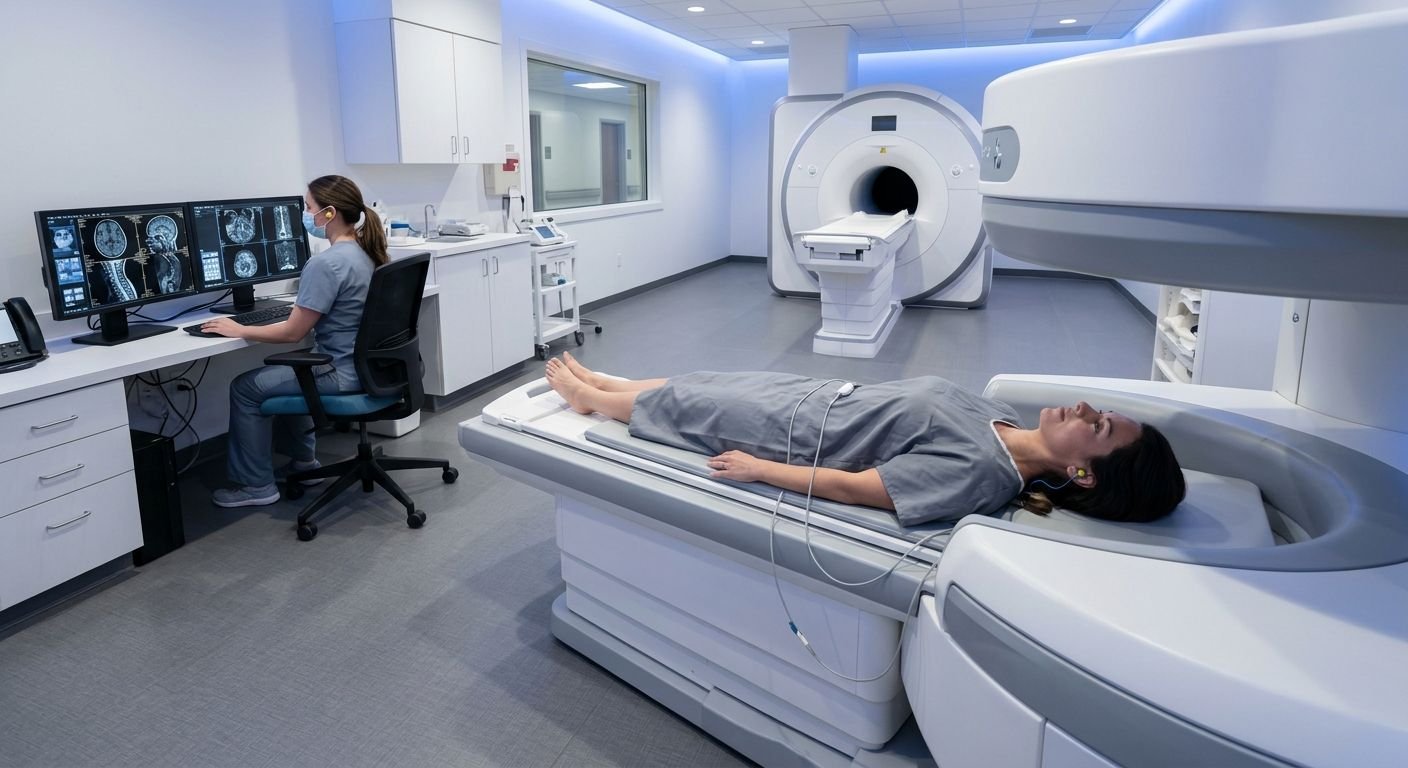
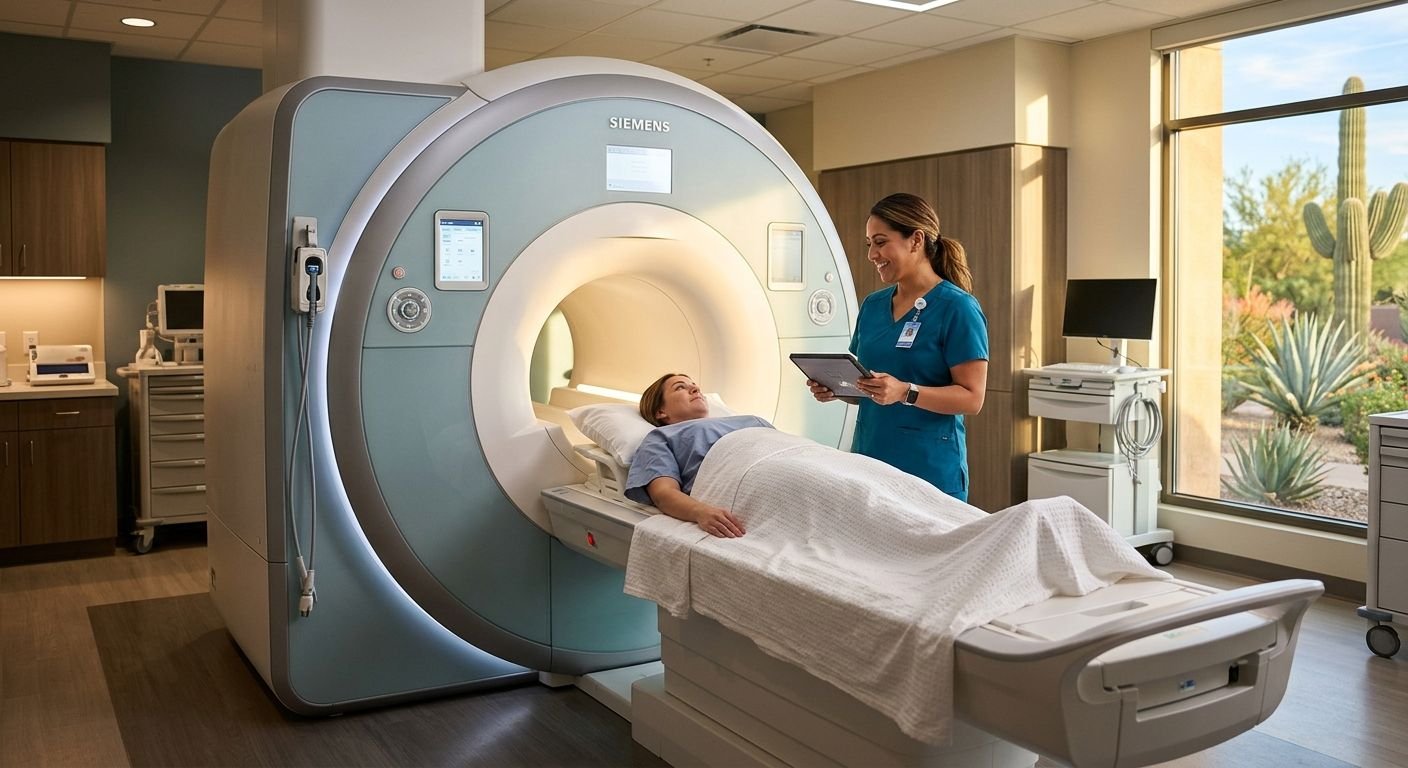
Open MRI suite with patient between flat magnets, closed MRI bore in background, radiologist reviewing images on monitor
Advanced MRI Technology, MRI & CT Scans, Personal Injury Care

Open and Closed MRI: Exam Selection, Comfort and Limitations

Scanner design, field strength and clinical suitability are separate considerations. An open scanner is not automatically less accurate for every study, and a higher field-strength number is not a universal guarantee of a better examination. In this article Choose a scanner for the ordered exam Discuss the tradeoffs for your examination Preparation and safety screening Arrange the examination before arriving Choose a scanner for the ordered exam Open-sided MRI and a wider-bore enclosed scanner are different designs. Comfort, field strength and exam capability should be discussed separately; one design is not automatically the best choice for every clinical question. Confirm the scanner available at the specific center, the ordered protocol and patient-size limits before booking. A network-wide reference to open MRI does not mean every location has that equipment. Ask the ordering clinician and imaging team whether the proposed scanner can perform the study needed. Avoid choosing solely on a field-strength number, a general image-quality comparison or an unverified weight limit. Discuss the tradeoffs for your examination Ask which scanner can perform the protocol requested by the treating clinician and what limitations apply. Comfort and the ability to remain still matter, but no design guarantees freedom from motion or anxiety. Do not assume sedation causes artifacts or that an open scanner always removes the need for medication. Discuss comfort and any medication plan with the care team before booking. Preparation and safety screening Follow the instructions for the exact examination rather than assuming every scan has the same preparation. Tell the team about implants, medical devices, possible pregnancy, relevant medical history and any contrast-related concerns. For MRI, complete the safety screening and follow instructions about metal, clothing and hearing protection. MRI uses no ionizing radiation, but that does not make every device, patient or examination suitable for every scanner. If you have claustrophobia, discuss scanner options and comfort measures before booking. Medication or sedation requires an individualized plan; confirm whether it is available and follow the prescribing clinician’s preparation, recovery and transport instructions. Arrange the examination before arriving Contact scheduling to confirm the exact examination, location, imaging order and preparation. Ask whether a same-day or walk-in request can be accommodated; neither is a guaranteed appointment. An insurance referral and an imaging order are different requirements. Ask which documents and authorizations apply to your exam and bring the completed order, insurance information and photo ID as instructed. Tell the team about language, mobility, anxiety or transportation needs in advance. Confirm which assistance is available at the selected center and whether arrangements or eligibility checks are needed. Questions about imaging or scheduling? Call 844-641-2111 or find a location to contact your preferred imaging center. Further reading MRI safety and exam suitability — FDA
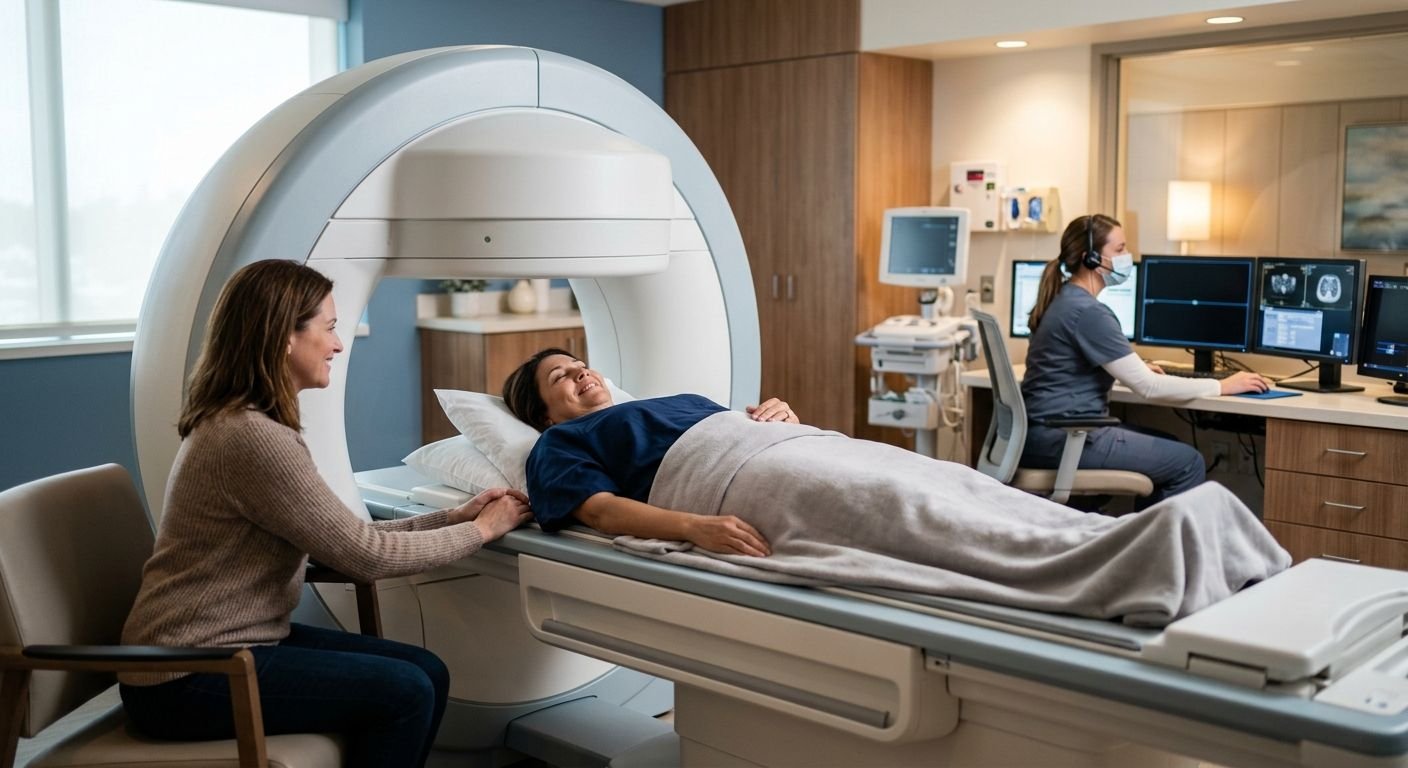
Illustration of a radiology technologist beside an MRI scanner and a patient on the examination table.
Advanced MRI Technology, MRI & CT Scans, Personal Injury Care

MRI Centers in Phoenix: Open MRI Locations and Scanner Options

Choose an MRI location based on the ordered exam and the scanner actually available there. A legacy page address containing a field-strength term is not proof of current equipment. In this article Choose a scanner for the ordered exam Confirm current site information Preparation and safety screening Arrange the examination before arriving Choose a scanner for the ordered exam Open-sided MRI and a wider-bore enclosed scanner are different designs. Comfort, field strength and exam capability should be discussed separately; one design is not automatically the best choice for every clinical question. Confirm the scanner available at the specific center, the ordered protocol and patient-size limits before booking. A network-wide reference to open MRI does not mean every location has that equipment. Ask the ordering clinician and imaging team whether the proposed scanner can perform the study needed. Avoid choosing solely on a field-strength number, a general image-quality comparison or an unverified weight limit. Confirm current site information The previously described scanner options include 1.5T systems and selected 0.3T open locations. Reconfirm the scanner and protocol with the center before booking; this article does not introduce or certify a new equipment inventory. Ask whether the selected system is appropriate for the body area and clinical question on the order. Field strength alone does not establish suitability or a guaranteed diagnostic outcome. Preparation and safety screening Follow the instructions for the exact examination rather than assuming every scan has the same preparation. Tell the team about implants, medical devices, possible pregnancy, relevant medical history and any contrast-related concerns. For MRI, complete the safety screening and follow instructions about metal, clothing and hearing protection. MRI uses no ionizing radiation, but that does not make every device, patient or examination suitable for every scanner. If you have claustrophobia, discuss scanner options and comfort measures before booking. Medication or sedation requires an individualized plan; confirm whether it is available and follow the prescribing clinician’s preparation, recovery and transport instructions. Arrange the examination before arriving Contact scheduling to confirm the exact examination, location, imaging order and preparation. Ask whether a same-day or walk-in request can be accommodated; neither is a guaranteed appointment. An insurance referral and an imaging order are different requirements. Ask which documents and authorizations apply to your exam and bring the completed order, insurance information and photo ID as instructed. Tell the team about language, mobility, anxiety or transportation needs in advance. Confirm which assistance is available at the selected center and whether arrangements or eligibility checks are needed. Questions about imaging or scheduling? Call 844-641-2111 or find a location to contact your preferred imaging center. Further reading MRI safety and exam suitability — FDA
A calm patient inside an open MRI scanner with a wide room view, technologist at console, family member nearby
Advanced MRI Technology, MRI & CT Scans, Patient Education

MRI and Claustrophobia: Planning Suitable Comfort Options

If you are anxious about an MRI, discuss it before booking. The appropriate plan depends on the ordered study, scanner capability, safety screening and your individual needs. In this article Choose a scanner for the ordered exam Preparation and safety screening Confirm the plan before the visit Arrange the examination before arriving Choose a scanner for the ordered exam Open-sided MRI and a wider-bore enclosed scanner are different designs. Comfort, field strength and exam capability should be discussed separately; one design is not automatically the best choice for every clinical question. Confirm the scanner available at the specific center, the ordered protocol and patient-size limits before booking. A network-wide reference to open MRI does not mean every location has that equipment. Ask the ordering clinician and imaging team whether the proposed scanner can perform the study needed. Avoid choosing solely on a field-strength number, a general image-quality comparison or an unverified weight limit. Preparation and safety screening Follow the instructions for the exact examination rather than assuming every scan has the same preparation. Tell the team about implants, medical devices, possible pregnancy, relevant medical history and any contrast-related concerns. For MRI, complete the safety screening and follow instructions about metal, clothing and hearing protection. MRI uses no ionizing radiation, but that does not make every device, patient or examination suitable for every scanner. If you have claustrophobia, discuss scanner options and comfort measures before booking. Medication or sedation requires an individualized plan; confirm whether it is available and follow the prescribing clinician’s preparation, recovery and transport instructions. Confirm the plan before the visit Ask whether an open-sided or wider-bore option can perform your examination at the selected location. Do not assume a comfort feature is available at every center. If medication or sedation is part of the plan, obtain the prescribing clinician’s instructions and confirm site capability, escort and recovery arrangements. Do not assume you can drive or resume normal activities immediately afterward. Arrange the examination before arriving Contact scheduling to confirm the exact examination, location, imaging order and preparation. Ask whether a same-day or walk-in request can be accommodated; neither is a guaranteed appointment. An insurance referral and an imaging order are different requirements. Ask which documents and authorizations apply to your exam and bring the completed order, insurance information and photo ID as instructed. Tell the team about language, mobility, anxiety or transportation needs in advance. Confirm which assistance is available at the selected center and whether arrangements or eligibility checks are needed. Questions about imaging or scheduling? Call 844-641-2111 or find a location to contact your preferred imaging center. Further reading MRI safety and exam suitability — FDA
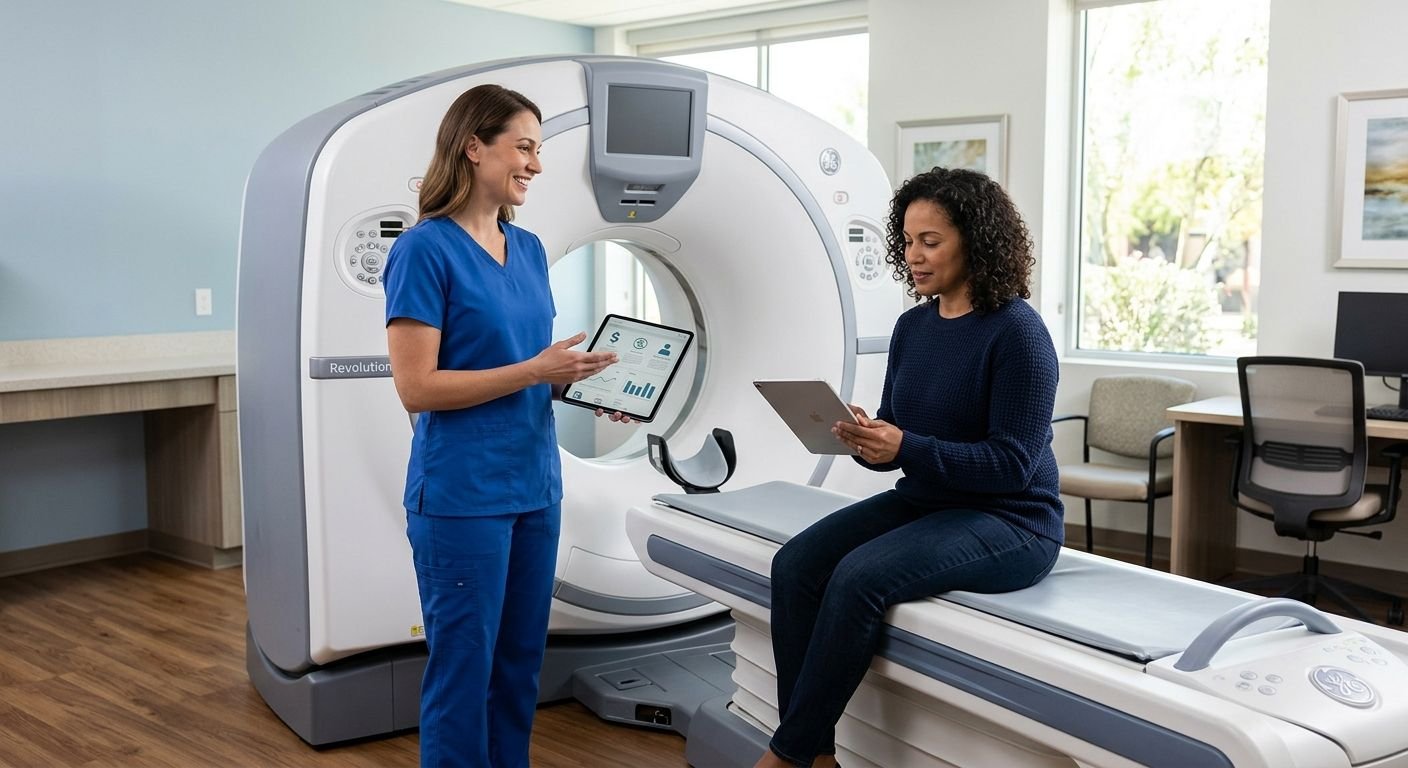
A modern CT scanner in a bright, welcoming imaging suite at AZ Advanced Imaging in Phoenix. A friendly technologist in blue scrubs stands beside the machine, holding a tablet displaying transparent pricing options. A patient in casual clothing sits comfortably, reviewing an iPad with cost estimates. Natural light streams through large windows, creating a calm, reassuring atmosphere.
Diagnostic Imaging, MRI & CT Scans, Patient Education

CT Scan Costs in Phoenix: Requesting a Clear Estimate

A current CT estimate should identify the ordered examination and what is included. Unverified hospital comparisons and broad cash-price ranges are not a quote for your study. In this article Confirm costs before the appointment Clarify the scope of the quote Arrange the examination before arriving Plan for results and follow-up Confirm costs before the appointment Request a written estimate for the ordered study and selected location. Ask whether the quoted amount includes the facility charge, radiologist interpretation, contrast and any additional services. For insurance, confirm network status, benefits and authorization requirements with the center and payer. An authorization or estimate does not establish that every charge will be paid. Ask what you may owe before agreeing to services. If a lien or letter of protection is proposed, request the actual written agreement and an explanation of payment obligations. Do not assume the arrangement makes imaging free or removes responsibility if a claim is delayed or unsuccessful. Clarify the scope of the quote Ask whether the estimate covers the body area and protocol ordered, contrast if needed, the scan itself and radiologist interpretation. Confirm whether additional services could result in separate charges. Compare providers using the same exam scope and payment method. A percentage saving is not meaningful without comparable, dated prices and identical inclusions. Arrange the examination before arriving Contact scheduling to confirm the exact examination, location, imaging order and preparation. Ask whether a same-day or walk-in request can be accommodated; neither is a guaranteed appointment. An insurance referral and an imaging order are different requirements. Ask which documents and authorizations apply to your exam and bring the completed order, insurance information and photo ID as instructed. Tell the team about language, mobility, anxiety or transportation needs in advance. Confirm which assistance is available at the selected center and whether arrangements or eligibility checks are needed. Plan for results and follow-up Ask when the report is expected, how it will reach the ordering clinician and whom to contact if it has not arrived. Routine report timing depends on the study and review process; no fixed delivery deadline is promised here. The treating clinician interprets the report alongside symptoms, examination findings and prior studies. Imaging does not by itself determine treatment, the cause of an injury or a legal outcome. Request a clinical follow-up plan. Questions about imaging or scheduling? Call 844-641-2111 or find a location to contact your preferred imaging center.

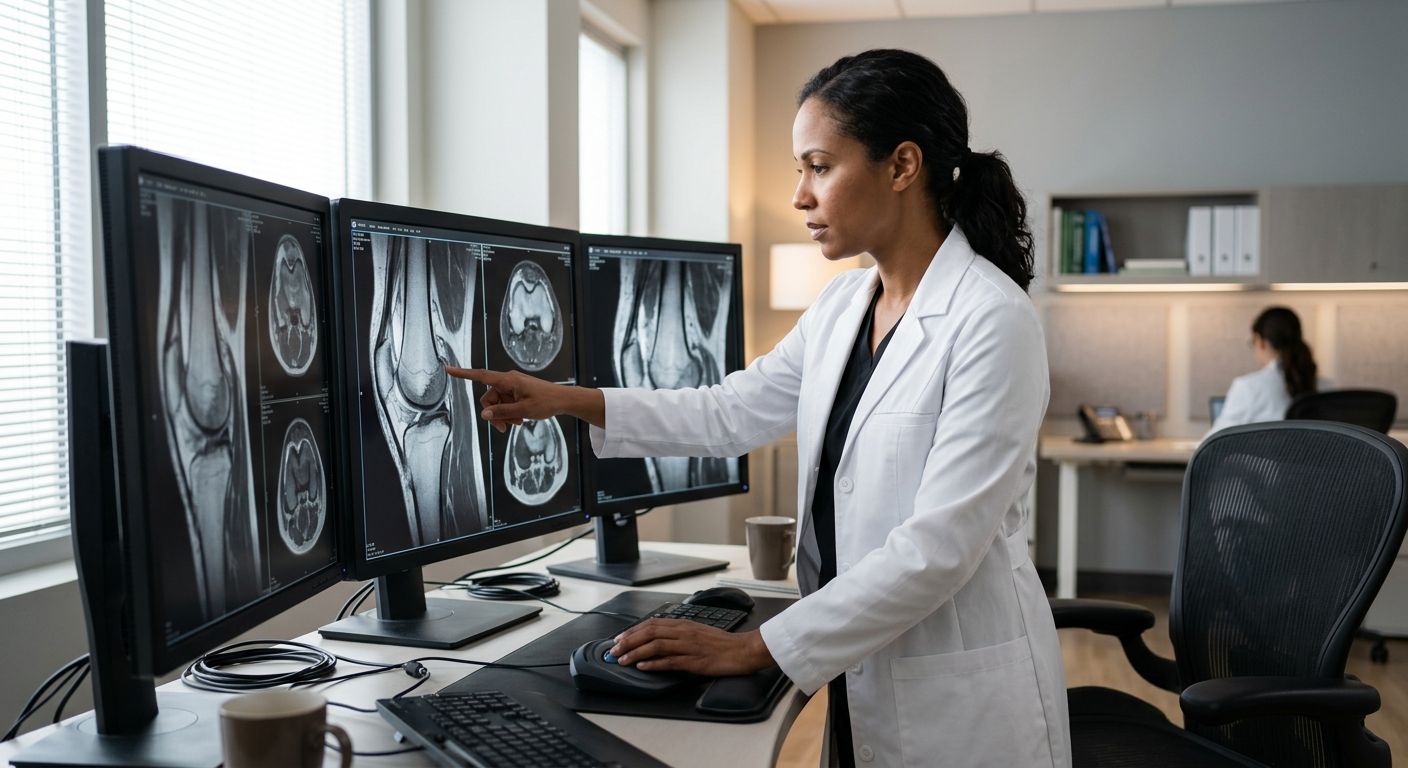
Board-certified radiologist analyzing high-resolution musculoskeletal MRI scans on multiple monitors in a modern medical reading room
Medical-Legal Services, MRI & CT Scans, Orthopedics

Musculoskeletal MRI in Phoenix: Questions About Exam Selection

When comparing musculoskeletal imaging options, focus on the ordered examination, actual equipment and interpretation process. Unverified patient anecdotes or general claims of specialist expertise should not decide the choice. In this article Choose a scanner for the ordered exam Ask about the clinical report Arrange the examination before arriving Preparation and safety screening Plan for results and follow-up Choose a scanner for the ordered exam Open-sided MRI and a wider-bore enclosed scanner are different designs. Comfort, field strength and exam capability should be discussed separately; one design is not automatically the best choice for every clinical question. Confirm the scanner available at the specific center, the ordered protocol and patient-size limits before booking. A network-wide reference to open MRI does not mean every location has that equipment. Ask the ordering clinician and imaging team whether the proposed scanner can perform the study needed. Avoid choosing solely on a field-strength number, a general image-quality comparison or an unverified weight limit. Ask about the clinical report Confirm whether a particular specialist review is requested and available. Ask how prior studies can be provided and how the ordering clinician will receive the report. A testimonial cannot establish the expected diagnostic result or turnaround for another patient. Discuss the limitations of the proposed examination with the treating clinician. Arrange the examination before arriving Contact scheduling to confirm the exact examination, location, imaging order and preparation. Ask whether a same-day or walk-in request can be accommodated; neither is a guaranteed appointment. An insurance referral and an imaging order are different requirements. Ask which documents and authorizations apply to your exam and bring the completed order, insurance information and photo ID as instructed. Tell the team about language, mobility, anxiety or transportation needs in advance. Confirm which assistance is available at the selected center and whether arrangements or eligibility checks are needed. Preparation and safety screening Follow the instructions for the exact examination rather than assuming every scan has the same preparation. Tell the team about implants, medical devices, possible pregnancy, relevant medical history and any contrast-related concerns. For MRI, complete the safety screening and follow instructions about metal, clothing and hearing protection. MRI uses no ionizing radiation, but that does not make every device, patient or examination suitable for every scanner. If you have claustrophobia, discuss scanner options and comfort measures before booking. Medication or sedation requires an individualized plan; confirm whether it is available and follow the prescribing clinician’s preparation, recovery and transport instructions. Plan for results and follow-up Ask when the report is expected, how it will reach the ordering clinician and whom to contact if it has not arrived. Routine report timing depends on the study and review process; no fixed delivery deadline is promised here. The treating clinician interprets the report alongside symptoms, examination findings and prior studies. Imaging does not by itself determine treatment, the cause of an injury or a legal outcome. Request a clinical follow-up plan. Questions about imaging or scheduling? Call 844-641-2111 or find a location to contact your preferred imaging center. Further reading MRI safety and exam suitability — FDA
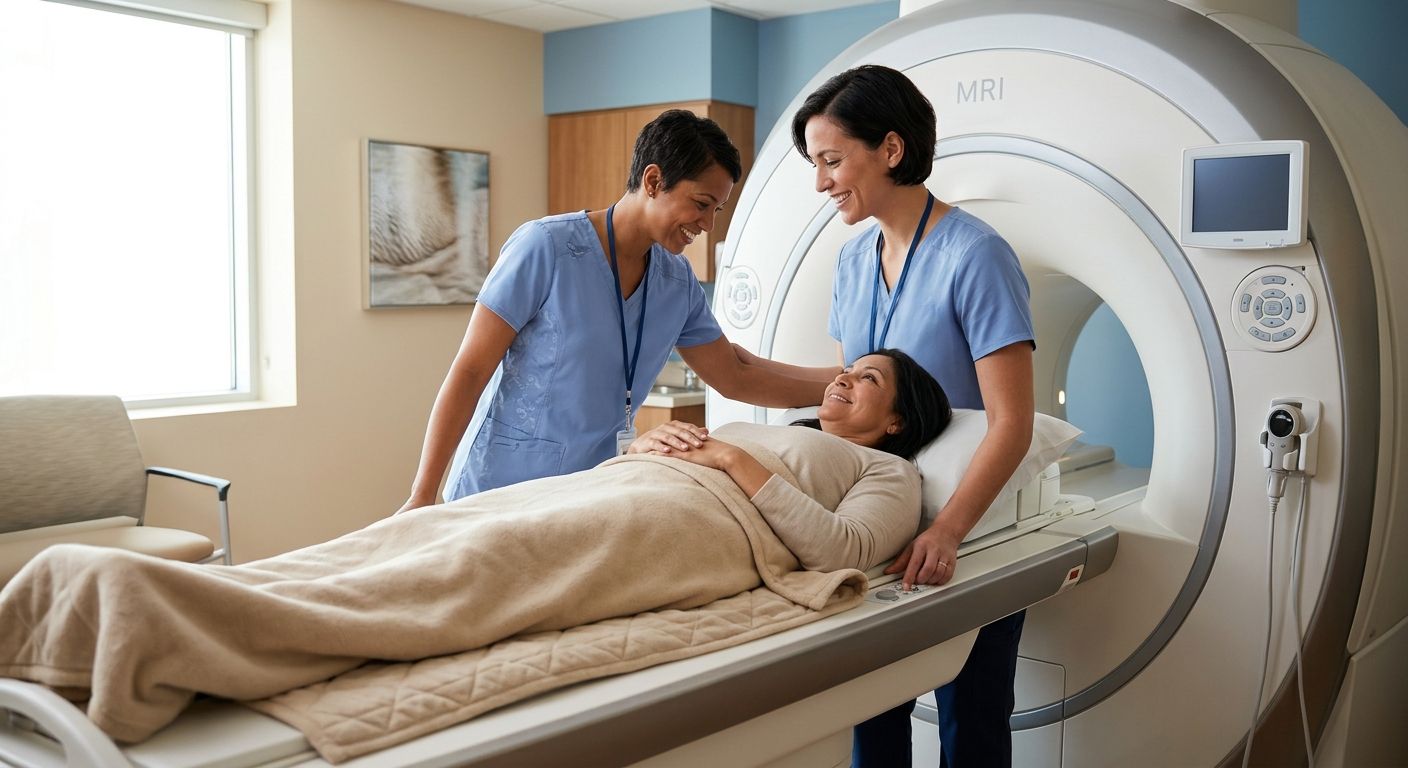
Compassionate imaging technologist assisting patient in modern MRI suite with open MRI machine
Diagnostic Imaging, Health & Wellness, Legal & Medical Coordination, Medical Facilities, MRI & CT Scans, Patient Education, Personal Injury Care, Radiology Services

Personal Injury Imaging in Phoenix: Preparing for an Ordered MRI

For a non-emergency MRI after an injury, confirm the ordered study, selected Phoenix location and preparation before arriving. The scan is one part of clinical evaluation and follow-up. In this article Outpatient imaging and urgent symptoms Arrange the examination before arriving Preparation and safety screening Confirm costs before the appointment Plan for results and follow-up Outpatient imaging and urgent symptoms For a medical emergency, call 911 or seek emergency care. An outpatient imaging appointment is not a substitute for emergency assessment after a serious injury or with severe or worsening symptoms. After clinical assessment, the ordering clinician can decide whether imaging is needed, which examination addresses the question and how urgently it should be performed. Do not assume an MRI is required after every accident. Arrange the examination before arriving Contact scheduling to confirm the exact examination, location, imaging order and preparation. Ask whether a same-day or walk-in request can be accommodated; neither is a guaranteed appointment. An insurance referral and an imaging order are different requirements. Ask which documents and authorizations apply to your exam and bring the completed order, insurance information and photo ID as instructed. Tell the team about language, mobility, anxiety or transportation needs in advance. Confirm which assistance is available at the selected center and whether arrangements or eligibility checks are needed. Preparation and safety screening Follow the instructions for the exact examination rather than assuming every scan has the same preparation. Tell the team about implants, medical devices, possible pregnancy, relevant medical history and any contrast-related concerns. For MRI, complete the safety screening and follow instructions about metal, clothing and hearing protection. MRI uses no ionizing radiation, but that does not make every device, patient or examination suitable for every scanner. If you have claustrophobia, discuss scanner options and comfort measures before booking. Medication or sedation requires an individualized plan; confirm whether it is available and follow the prescribing clinician’s preparation, recovery and transport instructions. Confirm costs before the appointment Request a written estimate for the ordered study and selected location. Ask whether the quoted amount includes the facility charge, radiologist interpretation, contrast and any additional services. For insurance, confirm network status, benefits and authorization requirements with the center and payer. An authorization or estimate does not establish that every charge will be paid. Ask what you may owe before agreeing to services. If a lien or letter of protection is proposed, request the actual written agreement and an explanation of payment obligations. Do not assume the arrangement makes imaging free or removes responsibility if a claim is delayed or unsuccessful. Plan for results and follow-up Ask when the report is expected, how it will reach the ordering clinician and whom to contact if it has not arrived. Routine report timing depends on the study and review process; no fixed delivery deadline is promised here. The treating clinician interprets the report alongside symptoms, examination findings and prior studies. Imaging does not by itself determine treatment, the cause of an injury or a legal outcome. Request a clinical follow-up plan. Questions about imaging or scheduling? Call 844-641-2111 or find a location to contact your preferred imaging center. Further reading MRI safety and exam suitability — FDA

Scroll to Top