AZ & TX Advanced Imaging

Radiology Services

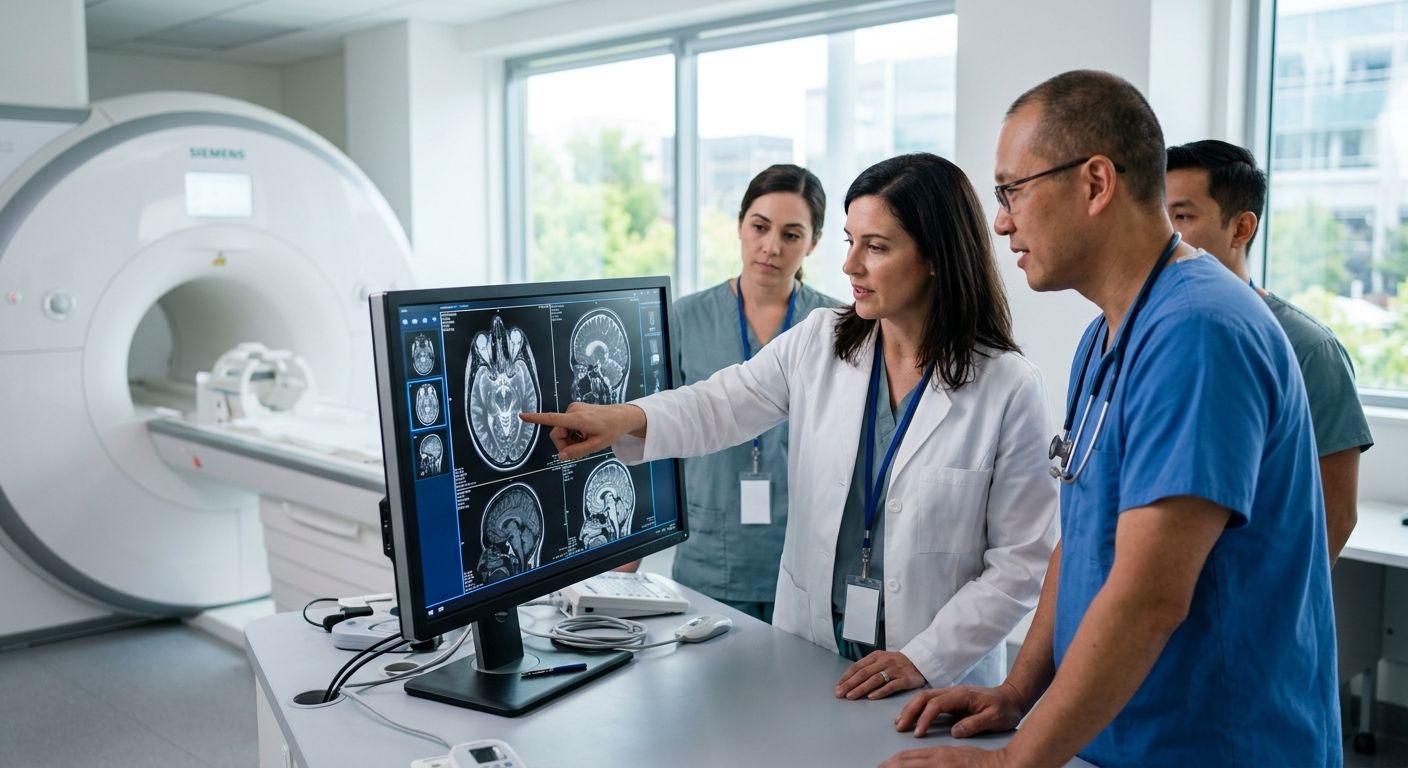
Radiology team discussing MRI brain scans on a high-resolution monitor in a modern imaging center, with a specialist pointing to a finding and a referring physician observing.
Medical-Legal Services, Radiology Protocols, Radiology Services

How to Reduce Radiology Report Turnaround Time: Proven Strategies

Table of Contents Understanding Radiology Report Turnaround Time and Its Importance Key Factors That Influence Radiology Report Turnaround The Clinical and Legal Impact of Report Turnaround Speed How Turnaround Affects Clinical Decision-Making The Role of Timely Reports in Personal Injury and Workers’ Comp Cases Legal Readiness: Court-Ready Documentation Within 48 Hours How to Navigate Report Turnaround for Fast Case Resolution Steps to Request and Receive Reports Quickly Working with AZ Advanced Imaging for Seamless Turnaround Coordinating Between Providers and Attorneys for Faster Results Advanced Reporting Protocols: Stat vs. Routine and Benchmarks Common Questions About Radiology Report Turnaround Times Your Radiology Partner for Fast, Reliable Diagnoses Understanding Radiology Report Turnaround Time and Its Importance Radiology report turnaround time is the interval between the completion of a patient’s imaging scan and the moment the finalized report becomes available to the referring provider. This metric directly shapes how quickly a diagnosis can be reached, treatment can begin, and a patient can gain peace of mind. Across our Phoenix, Chandler, Mesa, Scottsdale, and Tucson locations—and extending into Sugar Land, Katy, Tomball, and Conroe—we see every day how a swift, accurate report reduces uncertainty and lets clinical teams act without delay. Rapid report delivery shortens the window during which a patient sits with unanswered questions. The American College of Radiology, a leading professional authority in our field, recommends that routine reports be finalized within 24 to 48 hours and that emergent interpretations be issued in a matter of hours. These radiology turnaround time benchmarks anchor our own practice at Arizona Advanced Imaging: we provide finalized readings within 24 to 48 hours for routine studies and deliver same-day results for urgent or stat requests. What distinguishes stat vs routine radiology reports is not accuracy—both are reviewed by our fellowship-trained, board-certified radiologists—but speed of prioritization. A routine report follows our standard workflow, while a stat interpretation jumps the queue to address acute clinical questions. For personal injury and legal case coordination, this speed is especially valuable. Court-ready reports, prepared with careful attention to mechanism-aligned findings, move cases forward efficiently and help attorneys avoid procedural delays. We hold to the belief that rapid turnaround never requires a sacrifice in quality. Every image is examined by specialists who apply injury-specific protocols, and every impression is crafted to support both clinical treatment plans and litigation needs. Our 24–48 hour standard ensures that workers compensation radiology authorization flows without delays. Results may vary based on individual patient conditions. Key Factors That Influence Radiology Report Turnaround Radiology report turnaround time is shaped by a combination of clinical urgency, administrative workflows, and our internal operational standards. While every patient is eager for clarity, we balance speed with the diagnostic precision that referring physicians and legal teams require. At AZ & TX Advanced Imaging, we’ve designed our process to deliver routine reports within 24 – 48 hours while still accommodating the critical demands of emergency care. The distinction between a stat report and a routine study is one of the most significant drivers of turnaround speed. Stat studies are reserved for acute clinical scenarios — an emergency department trauma workup, a suspected stroke, or a finding that demands immediate intervention. These reports are typically finalized within hours, usually a 1-to-4-hour window, and contain focused preliminary findings that guide urgent care decisions. A routine study, in contrast, covers non-urgent follow-ups, scheduled screenings, and chronic condition monitoring, allowing our fellowship-trained radiologists the time to produce a comprehensive findings-and-impressions document. The following table provides a direct side-by-side look at how these two reporting categories compare. Comparison of Routine vs. Stat Radiology Reports Factor Routine Report Stat Report Turnaround Time 24–48 hours Within hours (typically 1–4 hours) Clinical Scenario Non-urgent follow-ups, scheduled screenings Emergency department, acute trauma, suspected stroke Documentation Depth Comprehensive findings and impressions Focused preliminary findings with follow-up addendum This stat vs routine radiology reports framework underscores why turnaround cannot be measured by a single benchmark. Radiology turnaround time benchmarks vary by clinical context, facility resources, and the complexity of the study itself. In Arizona, where our Phoenix headquarters is located, we maintain consistent 24 – 48 hour report turnaround by adhering to internal protocols that prioritize reading workflows without compromising accuracy. Administrative processes, particularly prior authorization, represent another factor that can slow report delivery. For patients navigating a workers’ compensation claim, the need for workers compensation radiology authorization introduces additional steps that, if not managed proactively, can delay scheduling and therefore the final report. Our team provides pre-authorization support — verifying benefits, obtaining claim numbers, and ensuring complete documentation is submitted — to reduce these administrative bottlenecks. Starting in 2026, updated CMS rules will require Medicare Advantage plans to render standard prior authorization decisions within 14 calendar days and expedited decisions within 72 hours. We have already aligned our internal insurance verification protocols with these evolving standards to support timely access to care. We recognize that waiting for imaging results can be stressful, so we coordinate every step — from insurance clearance to radiologist interpretation — to deliver 24 – 48 Hour Report Turnaround that supports informed treatment and legal decisions. By addressing the factors of urgency, authorization complexity, and internal workflow discipline, we help physicians and attorneys keep cases moving forward without extended uncertainty. Results may vary based on individual patient conditions. Please consult with a healthcare professional for diagnosis and treatment advice. Privacy Policy governs collection and use of personal information; we do not sell personal information for mass marketing. The Clinical and Legal Impact of Report Turnaround Speed In diagnostic imaging, radiology report turnaround time is far more than an operational metric—it is a critical factor that directly shapes patient outcomes and the progression of legal cases. When a patient presents with acute pain or a suspected traumatic injury, the speed at which a board-certified radiologist interprets their MRI or CT scan determines how quickly their treating physician can initiate the right course of care. At Arizona Advanced Imaging LLC, we have engineered our workflow to deliver finalized, case-ready reports within
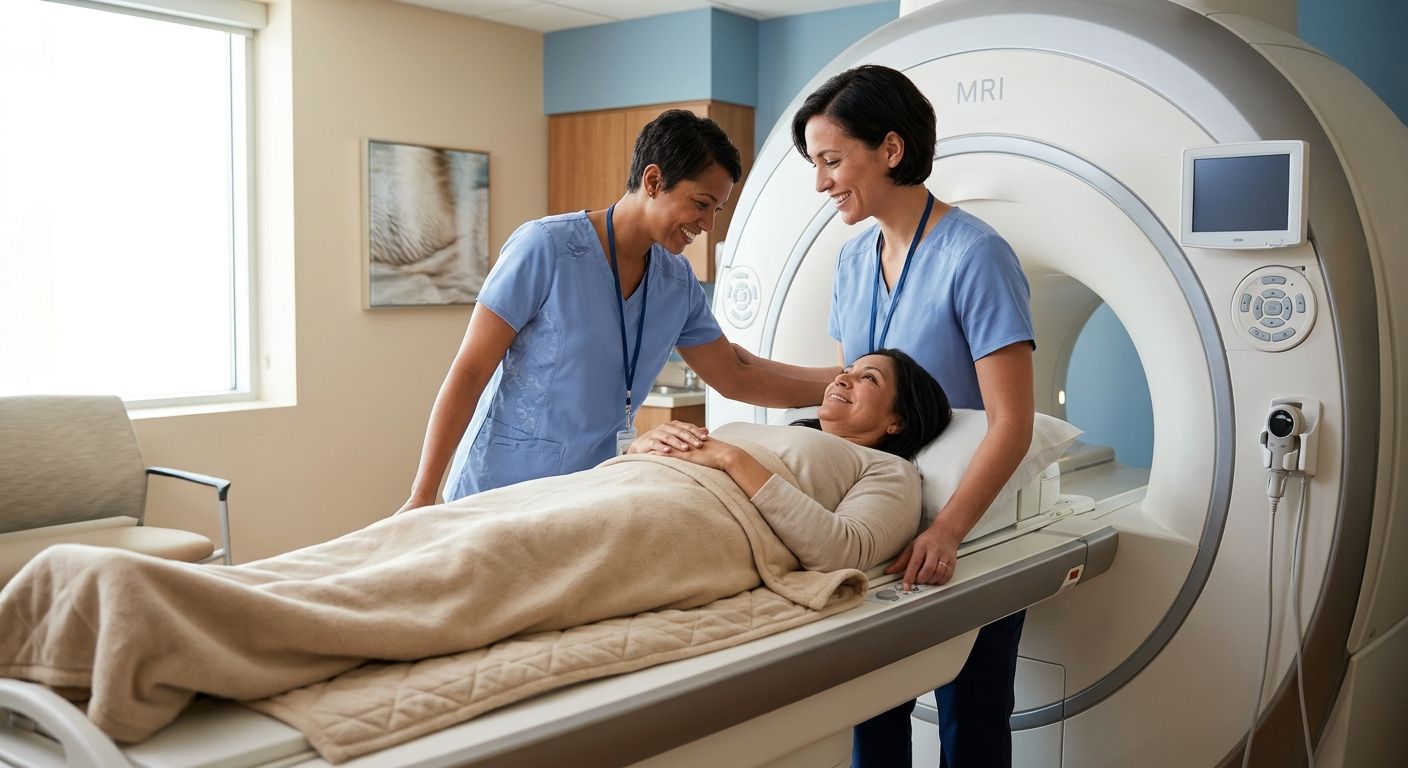
Compassionate imaging technologist assisting patient in modern MRI suite with open MRI machine
Diagnostic Imaging, Health & Wellness, Legal & Medical Coordination, Medical Facilities, MRI & CT Scans, Patient Education, Personal Injury Care, Radiology Services

Diagnostic Imaging for Personal Injury: MRI Guide in Phoenix

Table of Contents Diagnostic Imaging for Personal Injury and Orthopedic Care Understanding Diagnostic Imaging Modalities MRI: Magnetic Resonance Imaging for Soft Tissue Detail CT Scan: Advanced Cross-Sectional Imaging Ultrasound and X-Ray: Versatile Diagnostic Tools Benefits of Choosing a Specialized Imaging Center Fellowship-Trained Radiologists for Accurate Diagnoses Rapid Turnaround and Legal Coordination Convenient Locations and Concierge Services How Diagnostic Imaging Works at Our Centers Scheduling and Preparation The Imaging Procedure Report Generation and Digital Delivery Best Practices for Coordinating Imaging with Legal and Medical Teams Obtaining Court-Ready Radiology Reports Managing Billing with Letters of Protection Selecting the Right Imaging Center for Your Case Partnering with Arizona Advanced Imaging for Reliable Results Diagnostic Imaging for Personal Injury and Orthopedic Care Now, let’s explore the specific diagnostic imaging options available for personal injury and orthopedic care. When accidents occur, these advanced tools provide the clarity needed for accurate diagnosis and effective treatment planning, directly supporting both your recovery and any associated legal claims. MRI for soft tissue injuries: A personal injury MRI excels at revealing soft tissue damage invisible on X-rays. We use it to detect ligament tears, herniated discs, and muscle strains, which are common after accidents. Its precise imaging is vital for documenting these injuries thoroughly. CT scans for complex trauma: For detailed bone fracture evaluation and detecting traumatic brain injuries (TBI), CT scans are indispensable. They provide a rapid, comprehensive view of the skull, spine, and skeletal system after significant trauma. X-ray for initial assessment: Serving as a quick, first-line tool, X-rays efficiently identify obvious fractures and dislocations, giving us an immediate insight into your orthopedic condition. Ultrasound for soft tissue issues: Musculoskeletal radiology extends to ultrasound, a safe, radiation-free method ideal for assessing conditions like tendonitis and bursitis, offering dynamic evaluation where needed. Timely, same-day or next-day appointments are critical for documenting injury proximity to an accident. All studies are reviewed by fellowship-trained radiologists, with a report turnaround within 24–48 hours, supporting prompt clinical decisions and legal needs. Your health and clarity are our priority. With these imaging capabilities, we are ready to provide the clarity you need. Learn more or schedule an appointment for advanced imaging in Arizona contact. Please consult with a healthcare professional for diagnosis; radiation risks may apply. Results may vary. Understanding Diagnostic Imaging Modalities Understanding diagnostic imaging modalities helps patients and providers choose the right tool for each case. Our practice offers four core scanning methods, each designed to capture the precise detail needed for accurate diagnosis and effective personal injury care. MRI: Magnetic Resonance Imaging for Soft Tissue Detail Magnetic resonance imaging (MRI) uses strong magnetic fields and radio waves to create highly detailed images of soft tissues without any ionizing radiation. This makes it ideal for evaluating the brain, spinal cord, muscles, ligaments, and joints. In traumatic brain injury (TBI) cases, MRI can detect subtle abnormalities that other modalities might overlook. As a cornerstone of musculoskeletal radiology, MRI provides precise visualization of tendon tears, cartilage damage, and complex joint structures. For more detailed information, patients can refer to our radiology patient education resources. In personal injury MRI cases, the clarity of these scans supports both medical treatment and legal documentation. Our board-certified radiologists deliver reports within 24 to 48 hours, ensuring that attorneys and physicians have the evidence they need without delay. CT Scan: Advanced Cross-Sectional Imaging Computed tomography (CT) uses X-rays to generate cross-sectional images of the body, often in just minutes. This speed makes CT especially valuable for acute trauma and bone injuries. At Arizona Advanced Imaging, our same-day and next-day CT appointments help personal injury patients receive fast, accurate assessments after motor vehicle accidents or workplace incidents. The modality excels at detecting fractures, internal bleeding, and spinal damage, and our CT angiography studies provide detailed vascular imaging for complex cases. While CT involves a small dose of radiation, modern equipment with dose-reduction technology keeps exposure as low as possible. Because CT and MRI serve different purposes, our fellowship-trained radiologists select the optimal study for each injury—CT when speed and bone detail are paramount, and MRI when soft-tissue evaluation is needed. Ultrasound and X-Ray: Versatile Diagnostic Tools Ultrasound uses high-frequency sound waves to produce real-time images of soft tissues and blood flow, completely free of ionizing radiation. For musculoskeletal evaluations, our technologists can dynamically assess tendons, muscles, and joints—observing how they move during an exam. Vascular Doppler studies extend this capability to blood flow analysis, helping detect clots or vessel narrowing after trauma. X-ray, by contrast, remains the go-to tool for rapid bone and chest imaging; it is often the first test ordered when fractures or dislocations are suspected. Each of these diagnostic imaging techniques plays a distinct role in personal injury care: ultrasound offers dynamic, radiation-free soft-tissue assessment, while X-ray provides immediate fracture screening. Both are available with walk-in convenience and our standard 24-to-48-hour report turnaround, reinforcing our commitment as Your Trusted Radiology Partner. Each modality serves a unique purpose, and our team ensures you get the right scan for your specific needs. We combine advanced technology with board-certified expertise so that every image delivers clarity in every image, confidence in every decision. Benefits of Choosing a Specialized Imaging Center Specialized diagnostic imaging for personal injury cases requires expertise beyond standard scans. At Arizona Advanced Imaging, our advanced imaging personal injury services are designed to support legal teams with fast, accurate results. We offer a seamless experience that combines expert interpretation, rapid legal coordination, and patient-centered convenience, ensuring every case is supported by clear, defensible evidence. Fellowship-Trained Radiologists for Accurate Diagnoses The quality of an imaging report is only as strong as the radiologist interpreting it. Our team includes board-certified, fellowship-trained specialists in neuroradiology and musculoskeletal radiology. This sub-specialty training is critical for personal injury cases, as it enables the precise detection of subtle, trauma-related conditions, such as traumatic brain injuries and complex ligament tears, that general radiologists might overlook. According to Arizona Advanced Imaging, our radiologists’ deep focus on trauma-related pathologies means their findings are both detailed

Scroll to Top