AZ & TX Advanced Imaging

Author name: azadvancedimaging.com

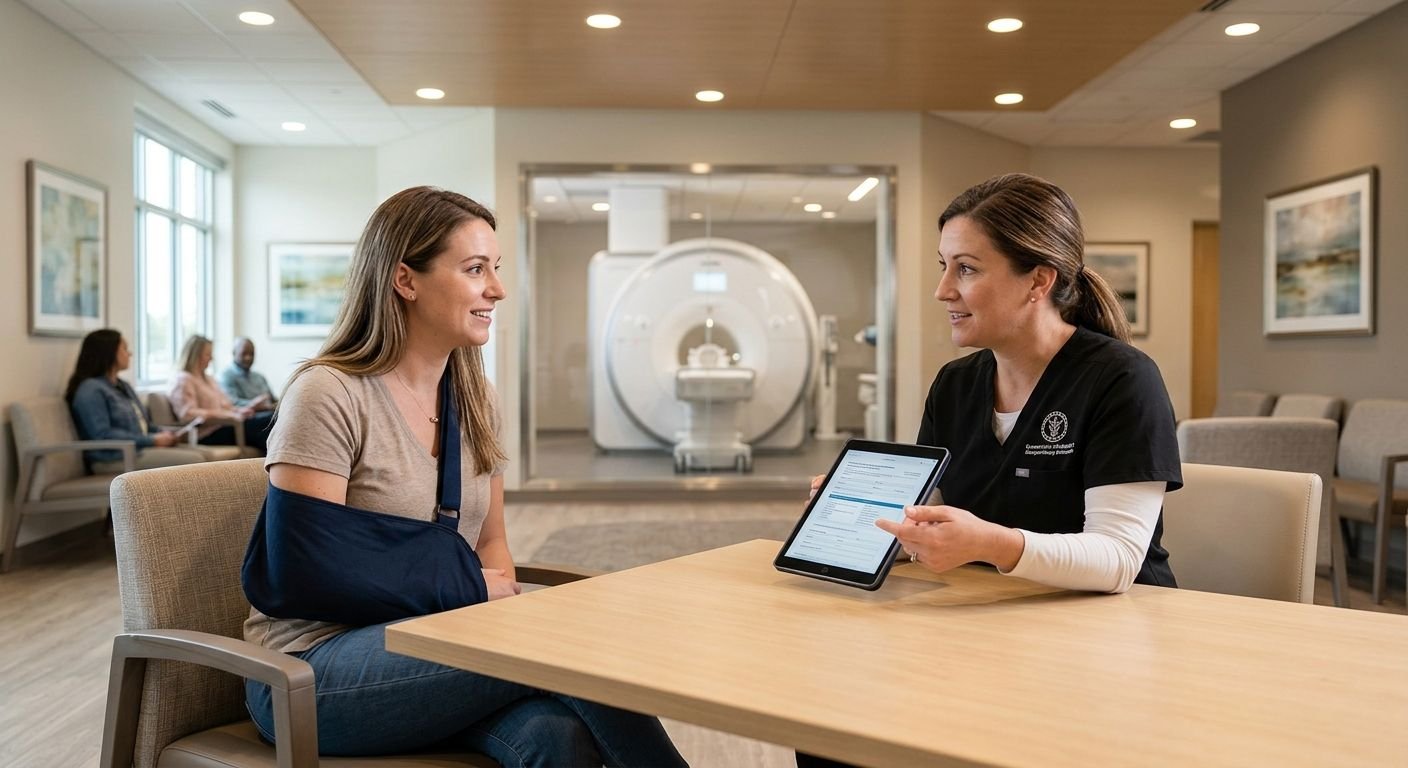
Professional photograph of a compassionate staff member explaining payment options to a personal injury patient in a bright, modern imaging center waiting area
Legal & Medical Coordination, Patient Resources, Personal Injury Care

MRI Scan Costs: How to Request an Exam-Specific Estimate

MRI costs depend on the ordered examination, location, included services and payment method. This guide replaces unverified price ranges and hospital-savings comparisons with questions for obtaining a useful estimate. In this article Confirm costs before the appointment Understand what changes the estimate Compare written information Arrange the examination before arriving Confirm costs before the appointment Request a written estimate for the ordered study and selected location. Ask whether the quoted amount includes the facility charge, radiologist interpretation, contrast and any additional services. For insurance, confirm network status, benefits and authorization requirements with the center and payer. An authorization or estimate does not establish that every charge will be paid. Ask what you may owe before agreeing to services. If a lien or letter of protection is proposed, request the actual written agreement and an explanation of payment obligations. Do not assume the arrangement makes imaging free or removes responsibility if a claim is delayed or unsuccessful. Understand what changes the estimate Ask whether contrast, additional sequences or a separate professional interpretation charge apply. Confirm the body area, protocol and number of examinations covered by the quote. For a proposed personal-injury payment arrangement, ask when charges become payable and who may remain responsible. Do not assume an insurance payment, lien or future settlement will cover every cost. Compare written information Request the estimate’s date, scope and conditions. Compare equivalent examinations rather than a hospital list charge with a discounted cash price or a different protocol. Ask the billing team to explain any difference between the estimate and the planned service before the examination. Keep a copy of the agreed terms. Arrange the examination before arriving Contact scheduling to confirm the exact examination, location, imaging order and preparation. Ask whether a same-day or walk-in request can be accommodated; neither is a guaranteed appointment. An insurance referral and an imaging order are different requirements. Ask which documents and authorizations apply to your exam and bring the completed order, insurance information and photo ID as instructed. Tell the team about language, mobility, anxiety or transportation needs in advance. Confirm which assistance is available at the selected center and whether arrangements or eligibility checks are needed. Questions about imaging or scheduling? Call 844-641-2111 or find a location to contact your preferred imaging center.
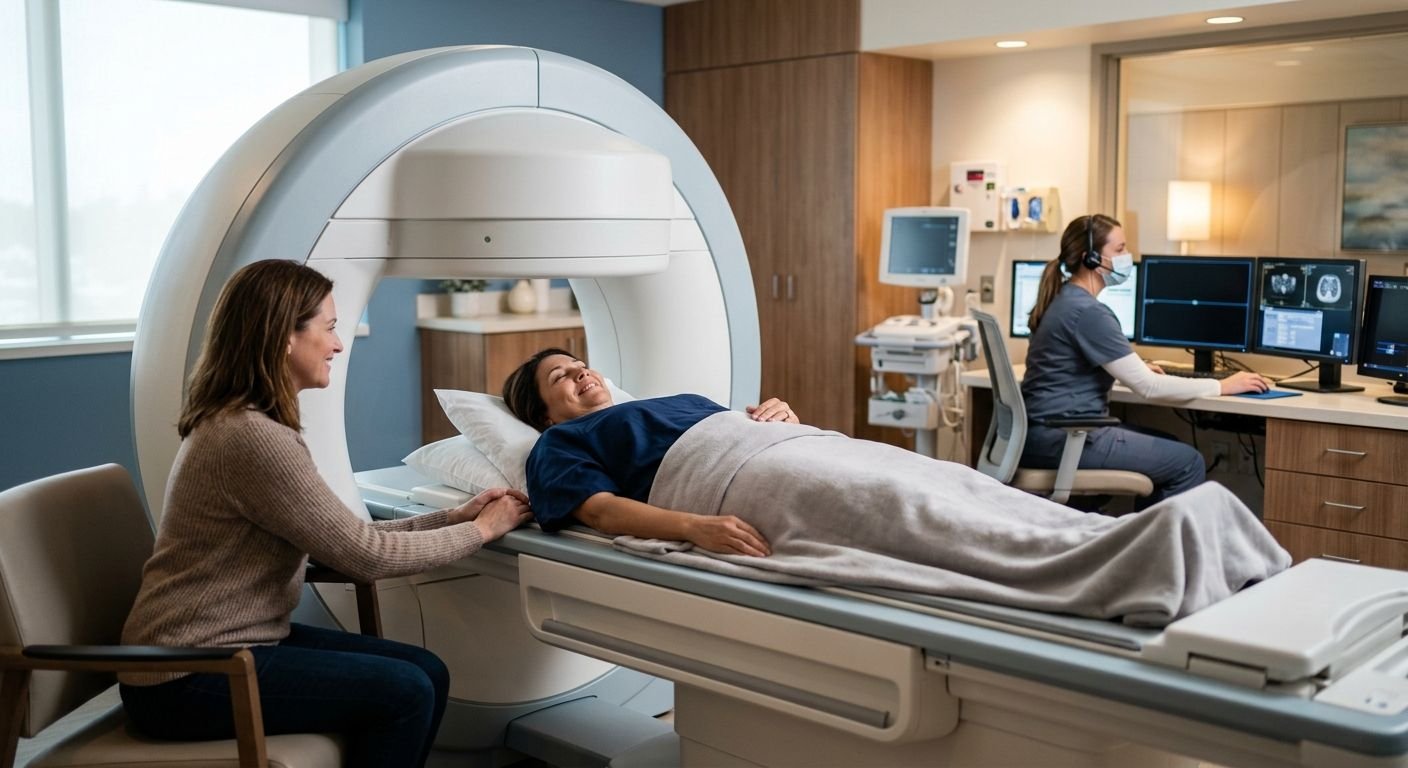
A calm patient inside an open MRI scanner with a wide room view, technologist at console, family member nearby
Advanced MRI Technology, MRI & CT Scans, Patient Education

MRI and Claustrophobia: Planning Suitable Comfort Options

If you are anxious about an MRI, discuss it before booking. The appropriate plan depends on the ordered study, scanner capability, safety screening and your individual needs. In this article Choose a scanner for the ordered exam Preparation and safety screening Confirm the plan before the visit Arrange the examination before arriving Choose a scanner for the ordered exam Open-sided MRI and a wider-bore enclosed scanner are different designs. Comfort, field strength and exam capability should be discussed separately; one design is not automatically the best choice for every clinical question. Confirm the scanner available at the specific center, the ordered protocol and patient-size limits before booking. A network-wide reference to open MRI does not mean every location has that equipment. Ask the ordering clinician and imaging team whether the proposed scanner can perform the study needed. Avoid choosing solely on a field-strength number, a general image-quality comparison or an unverified weight limit. Preparation and safety screening Follow the instructions for the exact examination rather than assuming every scan has the same preparation. Tell the team about implants, medical devices, possible pregnancy, relevant medical history and any contrast-related concerns. For MRI, complete the safety screening and follow instructions about metal, clothing and hearing protection. MRI uses no ionizing radiation, but that does not make every device, patient or examination suitable for every scanner. If you have claustrophobia, discuss scanner options and comfort measures before booking. Medication or sedation requires an individualized plan; confirm whether it is available and follow the prescribing clinician’s preparation, recovery and transport instructions. Confirm the plan before the visit Ask whether an open-sided or wider-bore option can perform your examination at the selected location. Do not assume a comfort feature is available at every center. If medication or sedation is part of the plan, obtain the prescribing clinician’s instructions and confirm site capability, escort and recovery arrangements. Do not assume you can drive or resume normal activities immediately afterward. Arrange the examination before arriving Contact scheduling to confirm the exact examination, location, imaging order and preparation. Ask whether a same-day or walk-in request can be accommodated; neither is a guaranteed appointment. An insurance referral and an imaging order are different requirements. Ask which documents and authorizations apply to your exam and bring the completed order, insurance information and photo ID as instructed. Tell the team about language, mobility, anxiety or transportation needs in advance. Confirm which assistance is available at the selected center and whether arrangements or eligibility checks are needed. Questions about imaging or scheduling? Call 844-641-2111 or find a location to contact your preferred imaging center. Further reading MRI safety and exam suitability — FDA
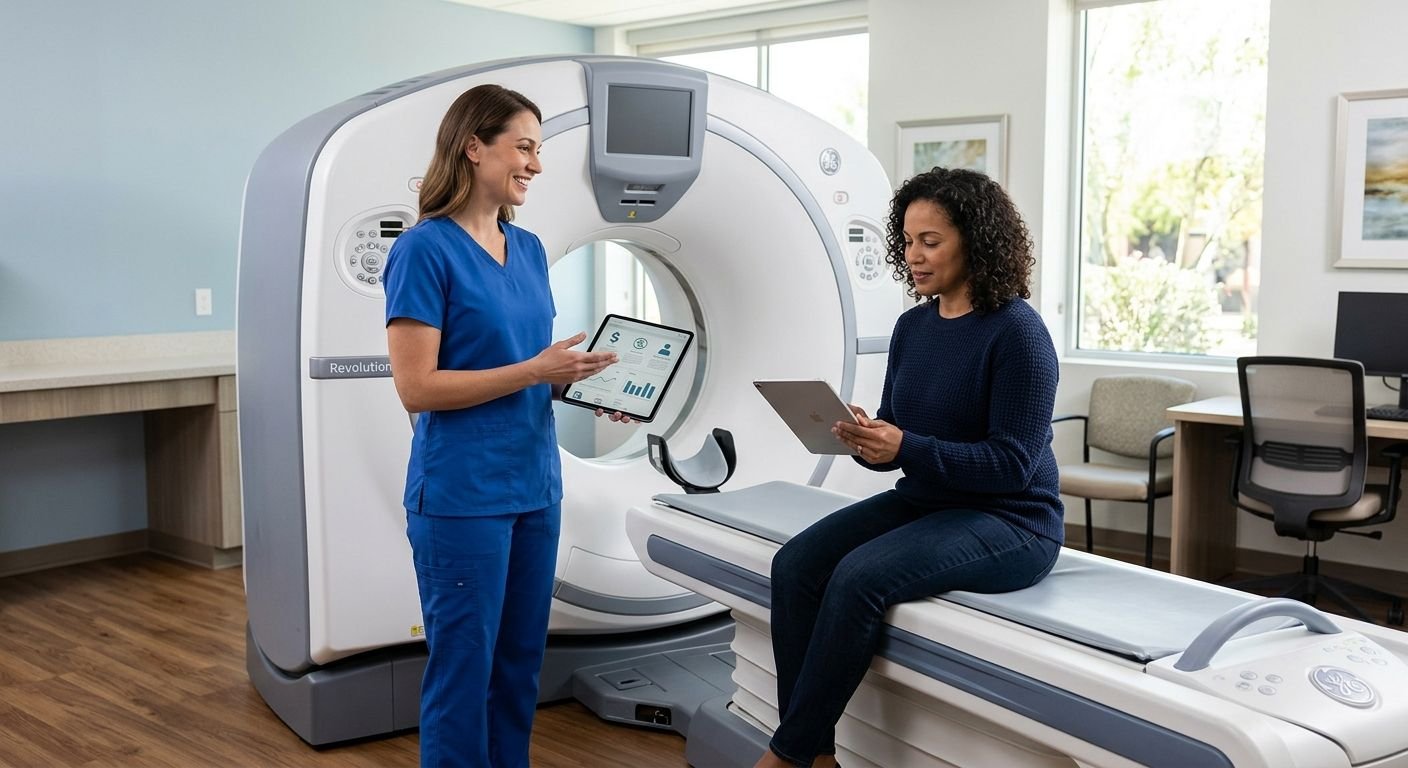
A modern CT scanner in a bright, welcoming imaging suite at AZ Advanced Imaging in Phoenix. A friendly technologist in blue scrubs stands beside the machine, holding a tablet displaying transparent pricing options. A patient in casual clothing sits comfortably, reviewing an iPad with cost estimates. Natural light streams through large windows, creating a calm, reassuring atmosphere.
Diagnostic Imaging, MRI & CT Scans, Patient Education

CT Scan Costs in Phoenix: Requesting a Clear Estimate

A current CT estimate should identify the ordered examination and what is included. Unverified hospital comparisons and broad cash-price ranges are not a quote for your study. In this article Confirm costs before the appointment Clarify the scope of the quote Arrange the examination before arriving Plan for results and follow-up Confirm costs before the appointment Request a written estimate for the ordered study and selected location. Ask whether the quoted amount includes the facility charge, radiologist interpretation, contrast and any additional services. For insurance, confirm network status, benefits and authorization requirements with the center and payer. An authorization or estimate does not establish that every charge will be paid. Ask what you may owe before agreeing to services. If a lien or letter of protection is proposed, request the actual written agreement and an explanation of payment obligations. Do not assume the arrangement makes imaging free or removes responsibility if a claim is delayed or unsuccessful. Clarify the scope of the quote Ask whether the estimate covers the body area and protocol ordered, contrast if needed, the scan itself and radiologist interpretation. Confirm whether additional services could result in separate charges. Compare providers using the same exam scope and payment method. A percentage saving is not meaningful without comparable, dated prices and identical inclusions. Arrange the examination before arriving Contact scheduling to confirm the exact examination, location, imaging order and preparation. Ask whether a same-day or walk-in request can be accommodated; neither is a guaranteed appointment. An insurance referral and an imaging order are different requirements. Ask which documents and authorizations apply to your exam and bring the completed order, insurance information and photo ID as instructed. Tell the team about language, mobility, anxiety or transportation needs in advance. Confirm which assistance is available at the selected center and whether arrangements or eligibility checks are needed. Plan for results and follow-up Ask when the report is expected, how it will reach the ordering clinician and whom to contact if it has not arrived. Routine report timing depends on the study and review process; no fixed delivery deadline is promised here. The treating clinician interprets the report alongside symptoms, examination findings and prior studies. Imaging does not by itself determine treatment, the cause of an injury or a legal outcome. Request a clinical follow-up plan. Questions about imaging or scheduling? Call 844-641-2111 or find a location to contact your preferred imaging center.
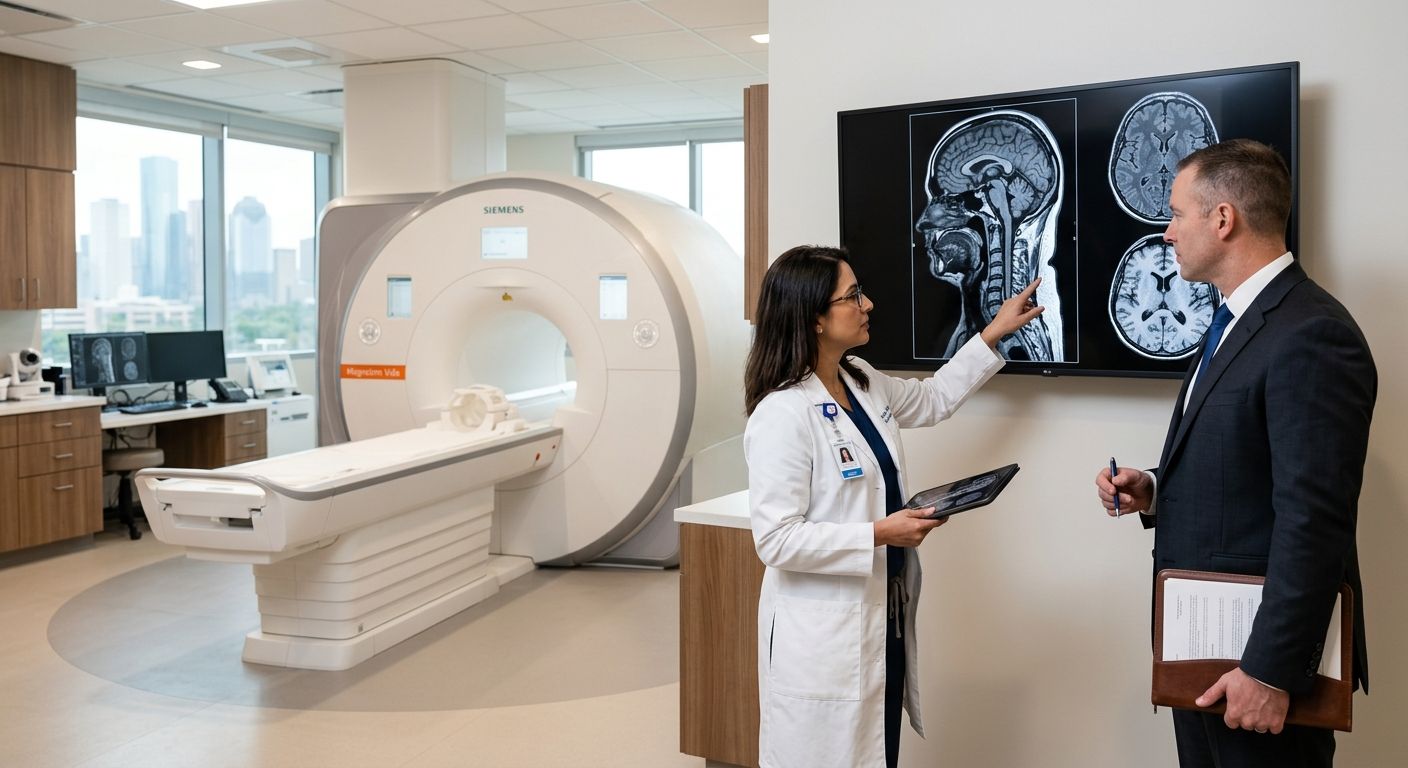
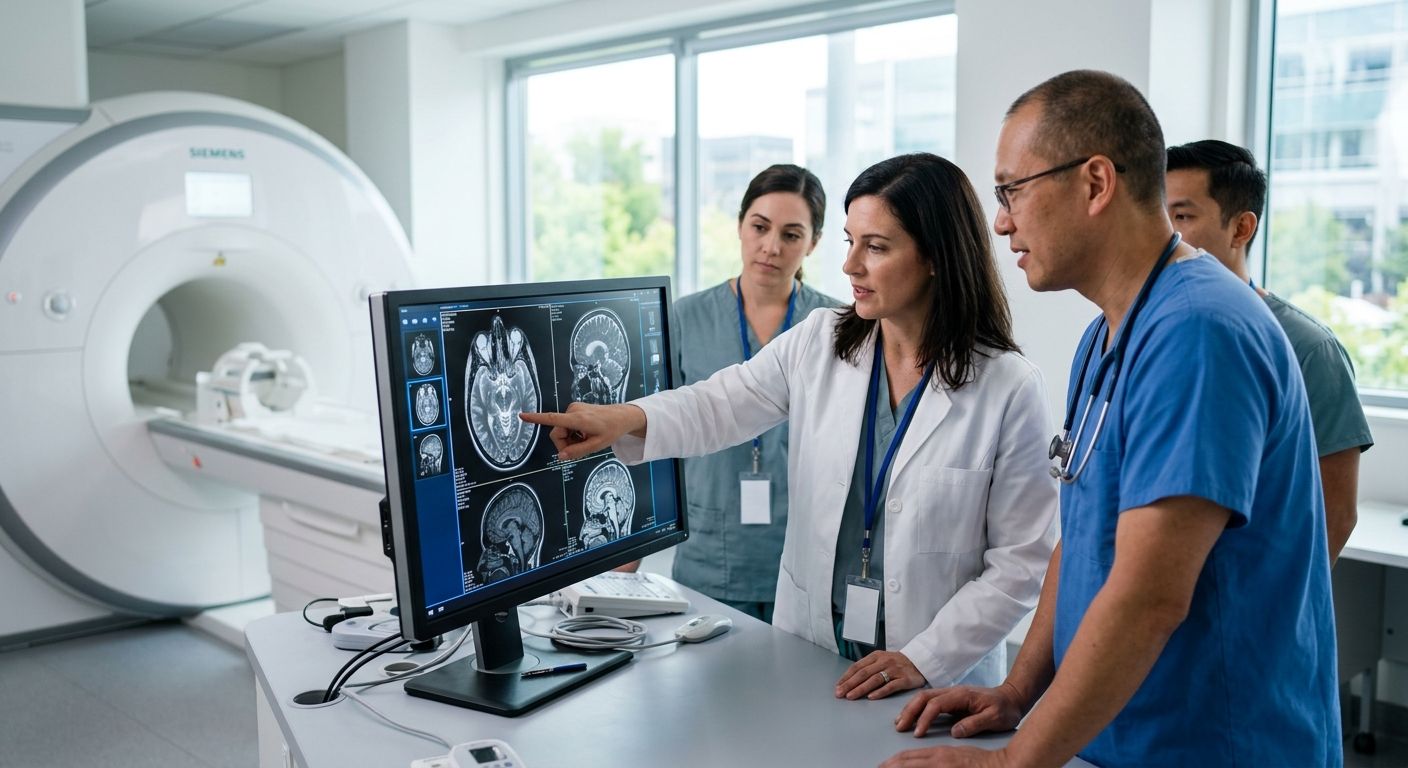
Radiology team discussing MRI brain scans on a high-resolution monitor in a modern imaging center, with a specialist pointing to a finding and a referring physician observing.
Medical-Legal Services, Radiology Protocols, Radiology Services

Radiology Report Turnaround: Planning Communication and Follow-Up

Report delivery depends on the examination, interpretation and communication process. Appointment access and scan completion are separate from the time a final report reaches the ordering clinician. In this article Ask for a realistic estimate Distinguish urgent findings from routine reporting Reduce avoidable communication gaps Ask for a realistic estimate Confirm when the report is expected, how it will be delivered and whether prior studies or additional review may affect timing. Ask which contact can check a missing report. No universal ACR requirement that every routine report be completed within 24–48 hours is asserted here. A local service target must be confirmed rather than treated as a guarantee. Distinguish urgent findings from routine reporting If symptoms require emergency assessment, seek urgent care rather than waiting for an outpatient report. Ask the treating clinician how time-sensitive findings and follow-up will be handled. Patients should not have to infer a diagnosis from scheduling messages. Arrange a discussion with the treating clinician to interpret the report and decide next steps. Reduce avoidable communication gaps Provide accurate ordering-clinician details and ask how prior examinations should be transferred. Confirm the appropriate records-delivery method and intended recipient. For authorized legal records requests, ask about the release process separately; there is no promise of instant law-firm portal access or legally decisive findings. Questions about imaging or scheduling? Call 844-641-2111 or find a location to contact your preferred imaging center.
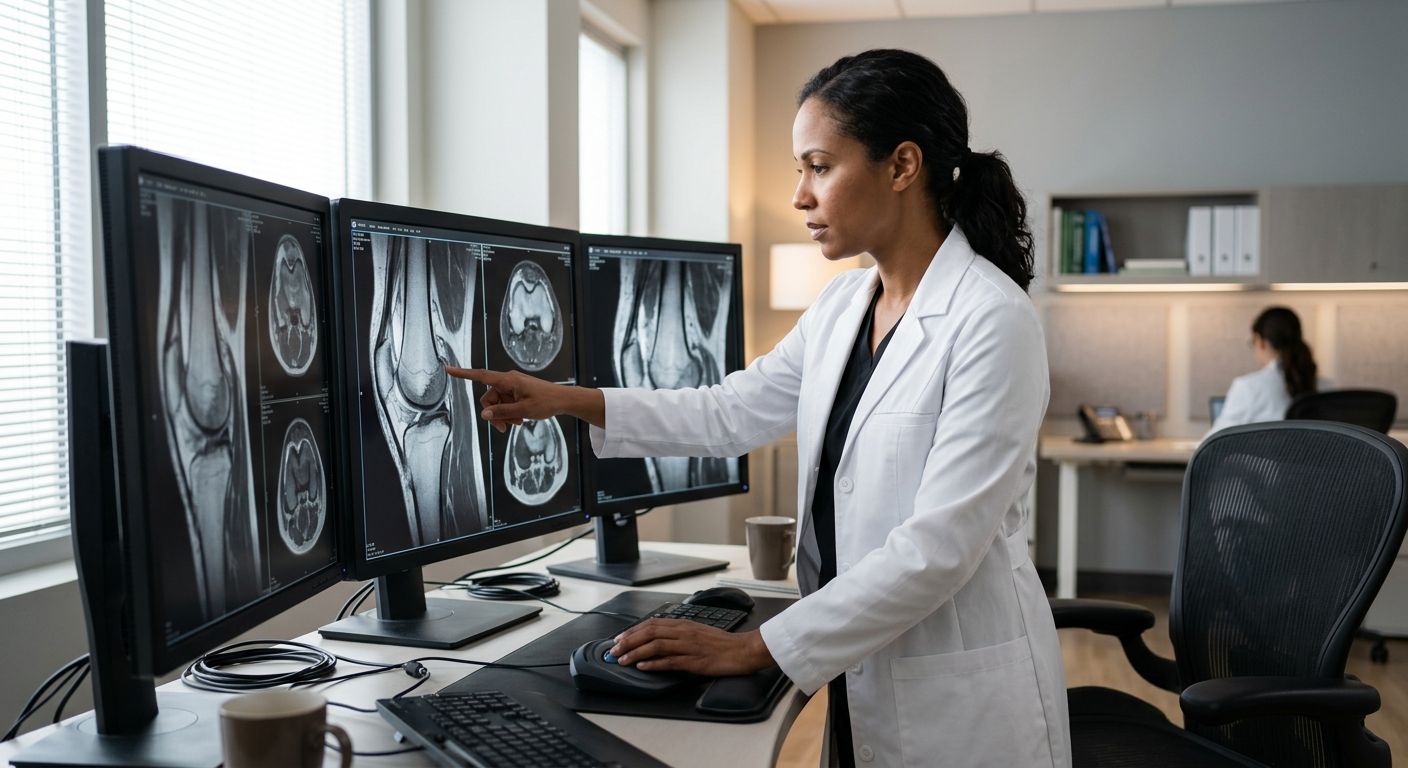
Modern diagnostic imaging suite with MRI scanner, radiologist and personal injury lawyer reviewing digital scan on large monitor in Houston, TX
Healthcare Legal Support, Legal & Medical Coordination, Medical-Legal Services

Imaging Coordination for Houston Personal Injury Attorneys

For patients and law firms in the Greater Houston area, imaging coordination starts with the treating clinician’s order and an actual imaging location. The service region is not an additional center. In this article Choose the Texas location Using imaging records appropriately Confirm costs before the appointment Plan for results and follow-up Choose the Texas location Use the location directory to contact Conroe, Katy, Sugar Land or Tomball as appropriate for the ordered study. Confirm the center, examination and appointment before directing a patient to arrive. Ask what documentation is needed, how to submit authorized records and who will address incomplete orders or billing questions. Using imaging records appropriately A radiology report describes medical findings and their limitations. It should be considered with the clinical history and other evidence; imaging alone does not establish accident causation, liability, damages or a settlement outcome. Confirm how the patient or authorized representative can request images and reports. Ask about the required authorization, intended recipient and delivery method rather than assuming a law firm has automatic portal access. Confirm costs before the appointment Request a written estimate for the ordered study and selected location. Ask whether the quoted amount includes the facility charge, radiologist interpretation, contrast and any additional services. For insurance, confirm network status, benefits and authorization requirements with the center and payer. An authorization or estimate does not establish that every charge will be paid. Ask what you may owe before agreeing to services. If a lien or letter of protection is proposed, request the actual written agreement and an explanation of payment obligations. Do not assume the arrangement makes imaging free or removes responsibility if a claim is delayed or unsuccessful. Plan for results and follow-up Ask when the report is expected, how it will reach the ordering clinician and whom to contact if it has not arrived. Routine report timing depends on the study and review process; no fixed delivery deadline is promised here. The treating clinician interprets the report alongside symptoms, examination findings and prior studies. Imaging does not by itself determine treatment, the cause of an injury or a legal outcome. Request a clinical follow-up plan. Questions about imaging or scheduling? Call 844-641-2111 or find a location to contact your preferred imaging center.
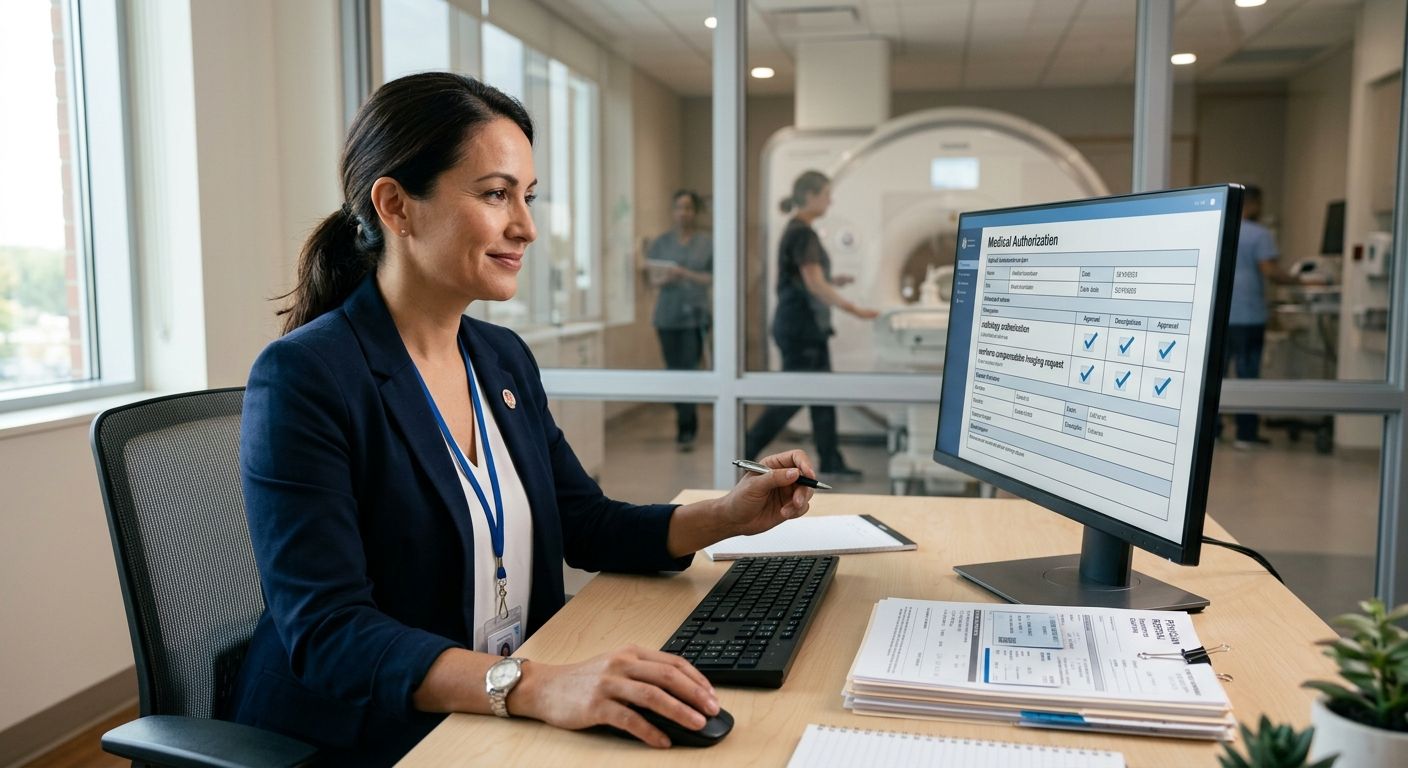
Board-certified radiologist analyzing high-resolution musculoskeletal MRI scans on multiple monitors in a modern medical reading room
Medical-Legal Services, MRI & CT Scans, Orthopedics

Musculoskeletal MRI in Phoenix: Questions About Exam Selection

When comparing musculoskeletal imaging options, focus on the ordered examination, actual equipment and interpretation process. Unverified patient anecdotes or general claims of specialist expertise should not decide the choice. In this article Choose a scanner for the ordered exam Ask about the clinical report Arrange the examination before arriving Preparation and safety screening Plan for results and follow-up Choose a scanner for the ordered exam Open-sided MRI and a wider-bore enclosed scanner are different designs. Comfort, field strength and exam capability should be discussed separately; one design is not automatically the best choice for every clinical question. Confirm the scanner available at the specific center, the ordered protocol and patient-size limits before booking. A network-wide reference to open MRI does not mean every location has that equipment. Ask the ordering clinician and imaging team whether the proposed scanner can perform the study needed. Avoid choosing solely on a field-strength number, a general image-quality comparison or an unverified weight limit. Ask about the clinical report Confirm whether a particular specialist review is requested and available. Ask how prior studies can be provided and how the ordering clinician will receive the report. A testimonial cannot establish the expected diagnostic result or turnaround for another patient. Discuss the limitations of the proposed examination with the treating clinician. Arrange the examination before arriving Contact scheduling to confirm the exact examination, location, imaging order and preparation. Ask whether a same-day or walk-in request can be accommodated; neither is a guaranteed appointment. An insurance referral and an imaging order are different requirements. Ask which documents and authorizations apply to your exam and bring the completed order, insurance information and photo ID as instructed. Tell the team about language, mobility, anxiety or transportation needs in advance. Confirm which assistance is available at the selected center and whether arrangements or eligibility checks are needed. Preparation and safety screening Follow the instructions for the exact examination rather than assuming every scan has the same preparation. Tell the team about implants, medical devices, possible pregnancy, relevant medical history and any contrast-related concerns. For MRI, complete the safety screening and follow instructions about metal, clothing and hearing protection. MRI uses no ionizing radiation, but that does not make every device, patient or examination suitable for every scanner. If you have claustrophobia, discuss scanner options and comfort measures before booking. Medication or sedation requires an individualized plan; confirm whether it is available and follow the prescribing clinician’s preparation, recovery and transport instructions. Plan for results and follow-up Ask when the report is expected, how it will reach the ordering clinician and whom to contact if it has not arrived. Routine report timing depends on the study and review process; no fixed delivery deadline is promised here. The treating clinician interprets the report alongside symptoms, examination findings and prior studies. Imaging does not by itself determine treatment, the cause of an injury or a legal outcome. Request a clinical follow-up plan. Questions about imaging or scheduling? Call 844-641-2111 or find a location to contact your preferred imaging center. Further reading MRI safety and exam suitability — FDA
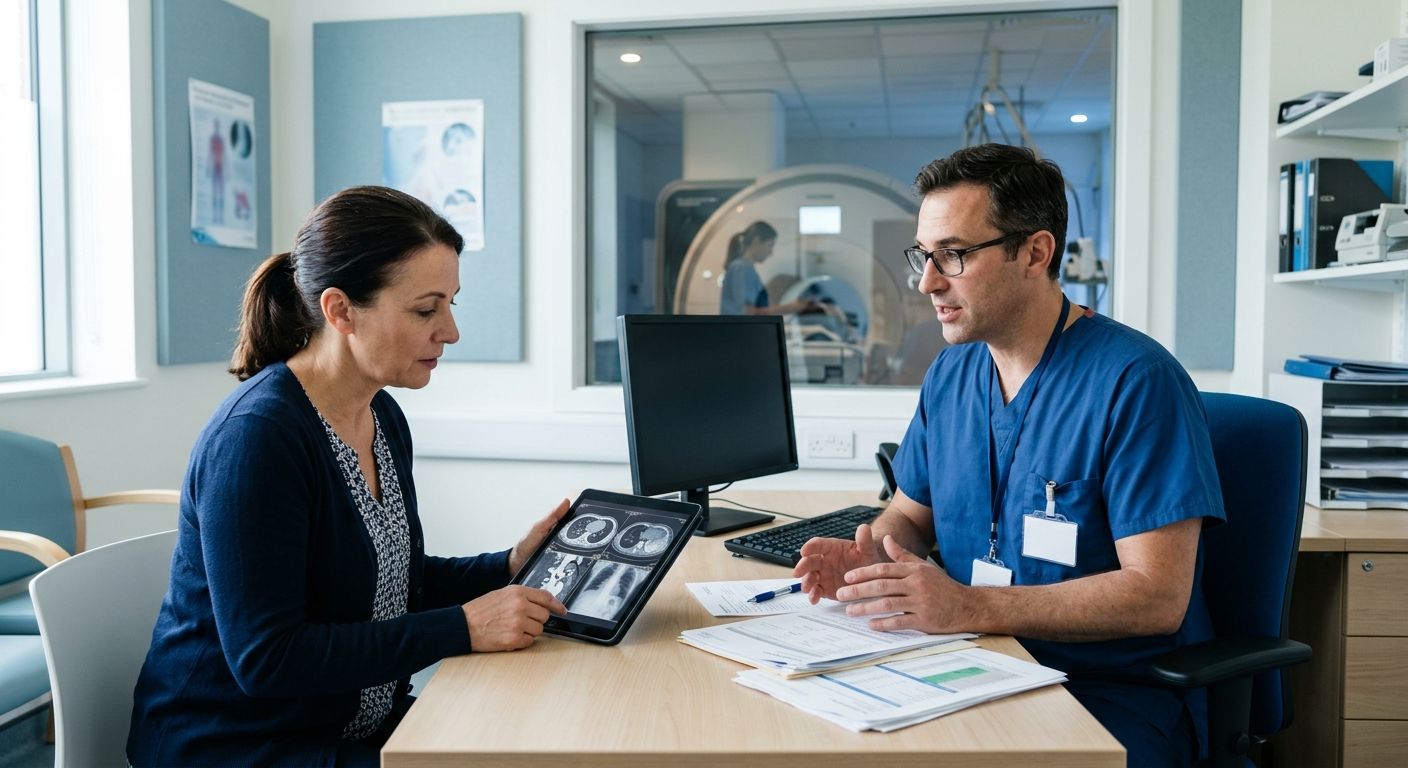
A medical authorization coordinator reviewing a workers' compensation imaging request on a computer screen in a modern office with diagnostic equipment visible through a window
Legal & Medical Coordination, Medical-Legal Services, Patient Resources

Workers’ Compensation Imaging Authorization: Questions to Confirm

Workers’ compensation imaging can involve an ordering clinician, employer, claims administrator and imaging center. Confirm their roles and requirements for the specific claim and jurisdiction. In this article Identify the responsible contacts Separate authorization, scheduling and results Arrange the examination before arriving Confirm costs before the appointment Plan for results and follow-up Identify the responsible contacts Have the claim number, adjuster or administrator details and ordering clinician’s information available. Ask which provider network, referral and authorization rules apply before arranging the exam. Decision timing varies by payer, request and applicable rules. No universal three-to-five or three-to-ten-business-day approval window is promised here. Separate authorization, scheduling and results Ask who will submit clinical documentation and track the request. If a denial occurs, request the reason and the payer’s review steps; an additional discussion does not guarantee approval. An approval does not by itself establish an open appointment, the patient’s full benefits or a report deadline. Confirm each step separately. Arrange the examination before arriving Contact scheduling to confirm the exact examination, location, imaging order and preparation. Ask whether a same-day or walk-in request can be accommodated; neither is a guaranteed appointment. An insurance referral and an imaging order are different requirements. Ask which documents and authorizations apply to your exam and bring the completed order, insurance information and photo ID as instructed. Tell the team about language, mobility, anxiety or transportation needs in advance. Confirm which assistance is available at the selected center and whether arrangements or eligibility checks are needed. Confirm costs before the appointment Request a written estimate for the ordered study and selected location. Ask whether the quoted amount includes the facility charge, radiologist interpretation, contrast and any additional services. For insurance, confirm network status, benefits and authorization requirements with the center and payer. An authorization or estimate does not establish that every charge will be paid. Ask what you may owe before agreeing to services. If a lien or letter of protection is proposed, request the actual written agreement and an explanation of payment obligations. Do not assume the arrangement makes imaging free or removes responsibility if a claim is delayed or unsuccessful. Plan for results and follow-up Ask when the report is expected, how it will reach the ordering clinician and whom to contact if it has not arrived. Routine report timing depends on the study and review process; no fixed delivery deadline is promised here. The treating clinician interprets the report alongside symptoms, examination findings and prior studies. Imaging does not by itself determine treatment, the cause of an injury or a legal outcome. Request a clinical follow-up plan. Questions about imaging or scheduling? Call 844-641-2111 or find a location to contact your preferred imaging center.
A female patient and a male radiologist in a modern radiology center discussing prior authorization, with an MRI machine in the background, no text visible.
Diagnostic Imaging, Medical-Legal Services, Patient Resources

Radiology Prior Authorization: A Guide for Patients and Providers

Prior authorization is a payer review process that may apply before an imaging service. The applicable requirements depend on the plan, examination and circumstances; authorization is separate from the clinical order and appointment. In this article Confirm responsibilities early 2026 CMS requirements and their scope Prepare a complete request Plan for results and follow-up Confirm responsibilities early Ask the ordering clinician, imaging center and payer who will submit the request, which documentation is needed and how status will be communicated. Do not assume the imaging center manages every part of the process. If a request is denied, ask the payer for the reason and available review or appeal steps. A peer-to-peer discussion, when offered, follows that payer’s process and does not guarantee approval. 2026 CMS requirements and their scope The CMS Interoperability and Prior Authorization Final Rule (CMS-0057-F) introduced process requirements generally beginning January 1, 2026. Its decision-timeframe requirements cover applicable Medicare Advantage, Medicaid and Children’s Health Insurance Program (CHIP) payers for medical items and services, excluding drugs. According to CMS’s prior authorization guidance, covered payers must decide requests as quickly as the patient’s condition requires, generally within seven calendar days for standard requests or 72 hours for expedited requests after receipt. Program-specific rules permit certain extensions. These timeframes do not apply to Qualified Health Plan issuers on the Federally-facilitated Exchanges under this rule and should not be assumed to govern every commercial plan or workers’ compensation request. The rule’s application programming interface (API) requirements generally have compliance dates beginning January 1, 2027, with dates varying by payer type. Prior authorization decision deadlines are separate from appointment availability and radiology report turnaround. Confirm the applicable plan’s requirements and request status with the payer and ordering clinician; the rule does not guarantee an approved scan or immediate imaging access. Prepare a complete request Confirm the ordered study, clinical reason, relevant notes and any requested prior imaging. Requirements differ; prior physical therapy or another conservative treatment should not be presented as a prerequisite for every injury or exam. A payer decision deadline is not a promise of immediate scheduling or a report-delivery deadline. Ask separately about appointment availability, preparation, benefits and expected charges. Plan for results and follow-up Ask when the report is expected, how it will reach the ordering clinician and whom to contact if it has not arrived. Routine report timing depends on the study and review process; no fixed delivery deadline is promised here. The treating clinician interprets the report alongside symptoms, examination findings and prior studies. Imaging does not by itself determine treatment, the cause of an injury or a legal outcome. Request a clinical follow-up plan. Questions about imaging or scheduling? Call 844-641-2111 or find a location to contact your preferred imaging center. Further reading Prior authorization process requirements — CMS
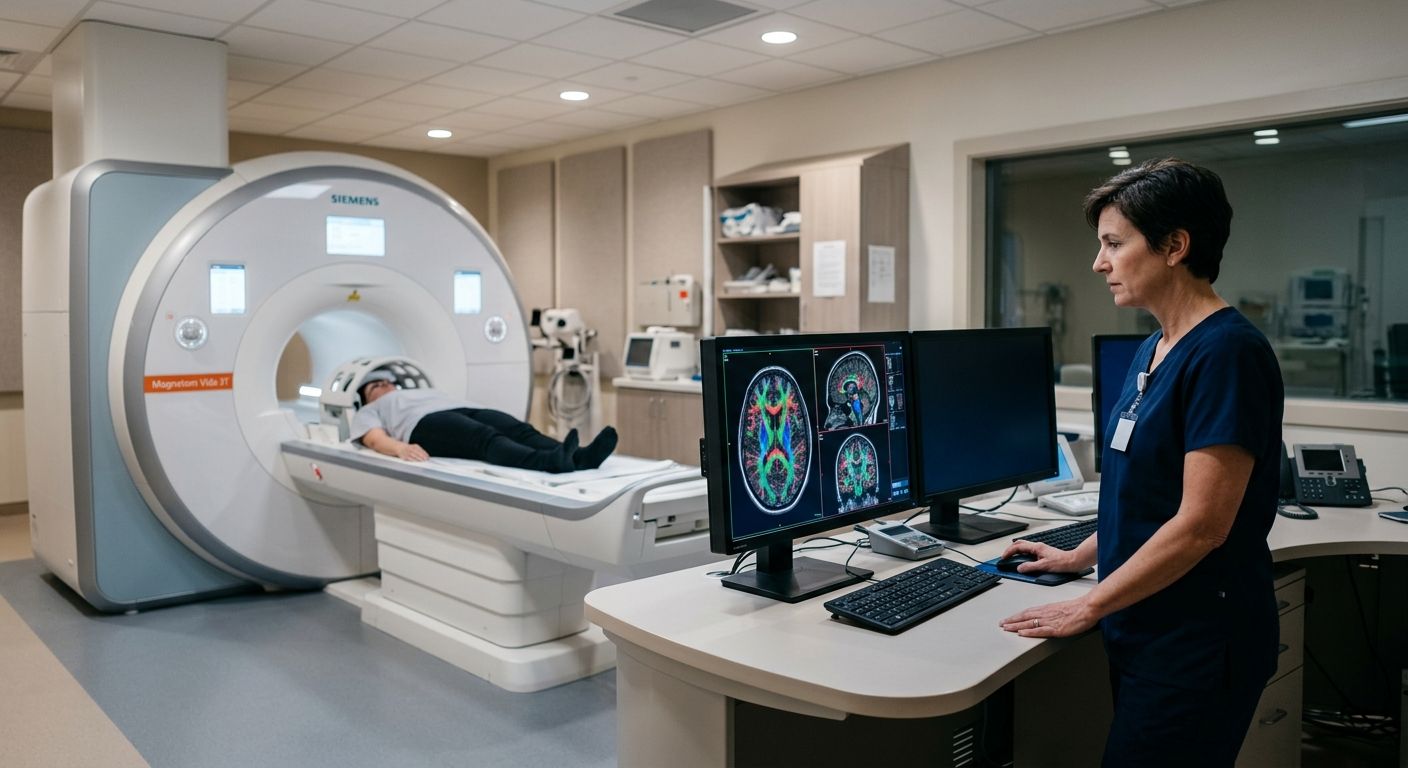
Modern MRI suite with advanced scanner and radiologist examining color-coded brain scan on monitor
Advanced MRI Technology, Diagnostic Imaging, Healthcare Technology, Medical-Legal Services, Patient Resources, Personal Injury Care, Traumatic Brain Injury (TBI)

SpinTech STAGE and TBI MRI: Regulatory Scope and Limitations

A software clearance and an MRI service protocol are not the same thing. Regulatory claims should identify the actual product and intended use rather than imply approval of an entire TBI diagnosis pathway. In this article Read the product record precisely What imaging can and cannot establish Discuss the local examination Plan for results and follow-up Read the product record precisely FDA record K210843 identifies STAGE from Spintech, Inc., and a 510(k) substantially equivalent decision dated June 29, 2021. It does not establish blanket FDA approval of all DTI, volumetry, QSM or locally branded TBI protocols. Ask the center to confirm the installed product, version and intended use. This article does not assert exclusive FDA-cleared technology, a fixed microbleed-detection percentage or a universally faster scan. What imaging can and cannot establish A concussion assessment starts with a healthcare provider’s clinical evaluation. Brain imaging is not routinely needed to identify every mild TBI or concussion; the clinician selects tests when they address a specific concern. CT and MRI can help evaluate some structural injuries, but they cannot detect every TBI. A normal scan does not by itself exclude a concussion, and an abnormality must be interpreted in clinical context. Advanced methods such as DTI, SWI and quantitative analysis have different uses and limitations. Do not treat a technique, software result or marketing protocol as a stand-alone diagnosis or a guarantee that subtle injury will be found. Discuss the local examination Confirm the ordered sequences, scanner compatibility, location and preparation. An educational description of SWI, DTI or QSM does not establish that every center provides those techniques. Plan for results and follow-up Ask when the report is expected, how it will reach the ordering clinician and whom to contact if it has not arrived. Routine report timing depends on the study and review process; no fixed delivery deadline is promised here. The treating clinician interprets the report alongside symptoms, examination findings and prior studies. Imaging does not by itself determine treatment, the cause of an injury or a legal outcome. Request a clinical follow-up plan. Questions about imaging or scheduling? Call 844-641-2111 or find a location to contact your preferred imaging center. Further reading STAGE 510(k) record K210843 — FDA TBI diagnosis and imaging limitations — FDA TBI imaging: advanced techniques and evidence — RSNA

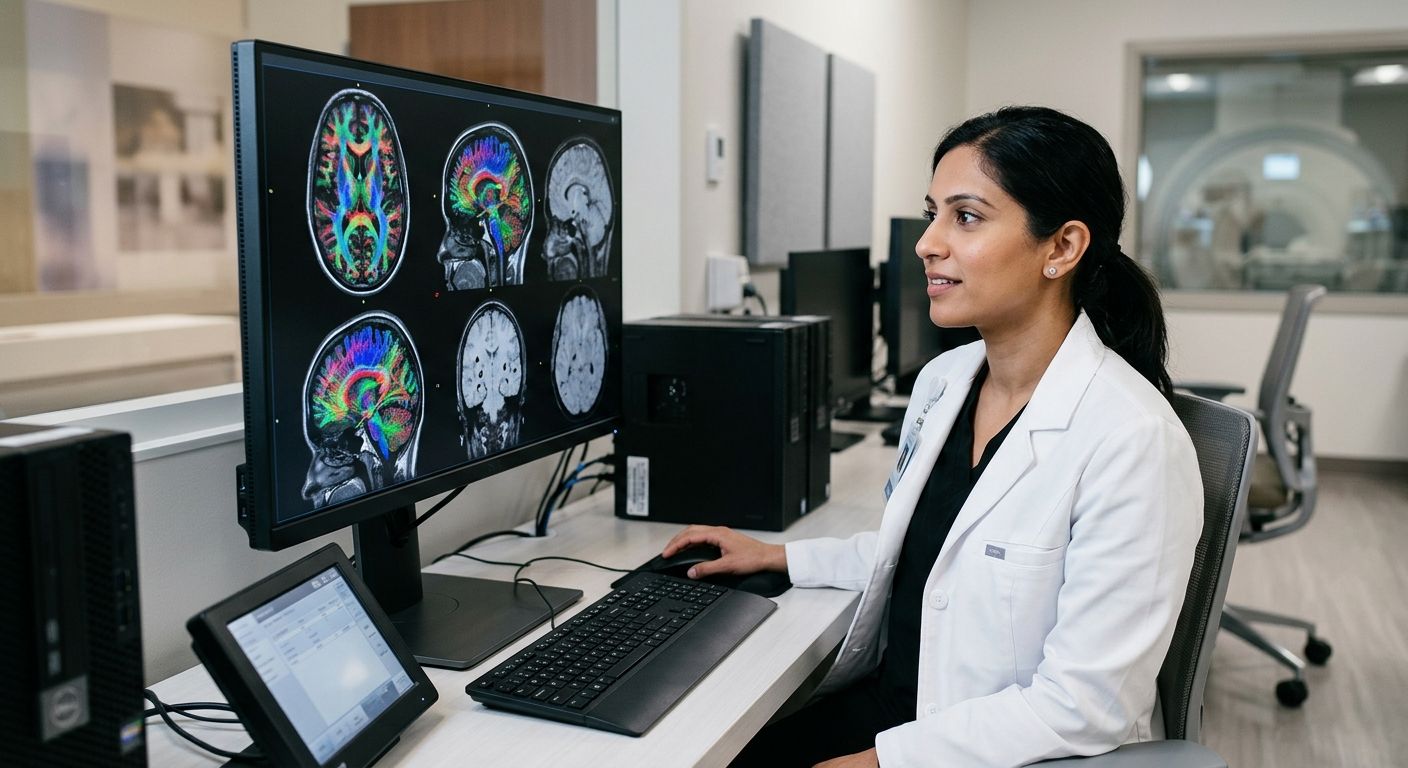
Board-certified radiologist reviewing advanced brain MRI scans on a large monitor in a modern imaging suite
Healthcare Legal Support, Medical Imaging Services, MRI & CT Diagnostics, Personal Injury Care, Radiology Protocols, Traumatic Brain Injury (TBI)

TBI Imaging: DTI, SWI and Clinical Limitations

Advanced MRI techniques should be discussed in the context of the clinical assessment and the evidence for the specific use. They are not universal screening tests for every head injury. In this article What imaging can and cannot establish Distinguish technique from diagnosis Confirm the actual study Plan for results and follow-up What imaging can and cannot establish A concussion assessment starts with a healthcare provider’s clinical evaluation. Brain imaging is not routinely needed to identify every mild TBI or concussion; the clinician selects tests when they address a specific concern. CT and MRI can help evaluate some structural injuries, but they cannot detect every TBI. A normal scan does not by itself exclude a concussion, and an abnormality must be interpreted in clinical context. Advanced methods such as DTI, SWI and quantitative analysis have different uses and limitations. Do not treat a technique, software result or marketing protocol as a stand-alone diagnosis or a guarantee that subtle injury will be found. Distinguish technique from diagnosis DTI examines water-diffusion characteristics, while SWI emphasizes magnetic-susceptibility differences. These techniques provide different information; neither should be advertised as proof of every subtle injury or automatic evidence of accident causation. RSNA’s TBI imaging review describes limitations in applying advanced techniques routinely to diagnosis or prognosis in an individual patient. Discuss the proposed use with an appropriately qualified clinician. Confirm the actual study Ask which sequences are ordered, where they can be performed and how the report will explain findings and limitations. This article makes no unsupported claim about a new 2026 AAN or CDC guideline. Plan for results and follow-up Ask when the report is expected, how it will reach the ordering clinician and whom to contact if it has not arrived. Routine report timing depends on the study and review process; no fixed delivery deadline is promised here. The treating clinician interprets the report alongside symptoms, examination findings and prior studies. Imaging does not by itself determine treatment, the cause of an injury or a legal outcome. Request a clinical follow-up plan. Questions about imaging or scheduling? Call 844-641-2111 or find a location to contact your preferred imaging center. Further reading About mild TBI and concussion — CDC TBI diagnosis and imaging limitations — FDA TBI imaging: advanced techniques and evidence — RSNA

Scroll to Top