


Table of Contents
Radiology Prior Authorization: What Patients and Providers Need to Know
Radiology prior authorization is required by many insurers before covering advanced imaging like MRI and CT scans. According to CMS, prior authorization helps ensure appropriate use of comprehensive diagnostic imaging services.
The authorization process typically follows four steps:
- Clinical documentation is submitted.
- Insurer reviews necessity.
- If denied, peer-to-peer review.
- Approval schedules imaging.
Medical Necessity Criteria
Insurers require that the ordered imaging meets specific medical necessity criteria for MRI or CT scans, as outlined by CMS guidelines. This includes a documented clinical reason and use of the appropriate modality.
Peer-to-Peer Review
If an initial authorization is denied, a peer-to-peer review radiology consultation lets the referring physician discuss the case with the insurer’s medical reviewer. This often resolves denials.
We handle pre-authorization and accept personal injury liens and letters of protection—no upfront costs. Contact us for help. Results may vary; consult your healthcare professional for diagnosis and treatment advice.
1. Understanding Prior Authorization in Radiology
Radiology prior authorization is a health plan requirement to approve imaging like MRI and CT before they are performed, ensuring medical necessity.
Insurers use prior authorization to control costs, reduce unnecessary imaging, and ensure appropriate use of radiology resources. CMS sets medical necessity criteria that commercial insurers often follow.
When a physician orders imaging, the referral center submits clinical information to the insurer. The request is reviewed against medical necessity criteria for MRI and other modalities. If denied, a peer-to-peer review radiology discussion between the ordering physician and an insurance medical director may be pursued.
At Arizona Advanced Imaging, we handle prior authorization paperwork and insurer coordination on our patients’ behalf. As a provider of comprehensive diagnostic radiology services, we streamline these steps to reduce administrative burdens.
We are committed to being Your Trusted Radiology Partner, helping you access needed imaging. Understanding this foundational step is key before exploring how the process works in practice.
2. How 2026 CMS Rules Impact Prior Authorization Timelines
Building on these challenges, the Centers for Medicare & Medicaid Services (CMS) has updated its Medicare payment regulations for 2026, directly impacting radiology prior authorization timelines.
According to CMS, the final rule mandates standard prior authorization decisions within 14 calendar days and expedited decisions within 72 hours. This requirement applies specifically to Medicare Advantage plans, creating a binding obligation for insurers and providers to adhere to these strict timeframes. To facilitate compliance, the rule requires electronic prior authorization and interoperability standards, which accelerate data exchange and minimize manual processing. Standardized medical necessity criteria for MRI and peer-to-peer review radiology protocols further support timely, clinically-driven decisions.
At Arizona Advanced Imaging, we have aligned our pre-authorization support and 24–48 hour report turnaround to these mandates. Your health and clarity are our priority, and we ensure rapid imaging access without administrative delays. We coordinate directly with insurers to meet these timelines, so patients receive the scans they need without delay.
3. Speeding Up Imaging Authorization for Injury Claims
For injury patients, radiology prior authorization can stall critical imaging. We handle all insurance pre-authorizations—verifying medical necessity criteria for MRI and conducting peer-to-peer review radiology when required—so you can focus on recovery. We also provide rapid trauma x-ray imaging to document injuries immediately. Across our Arizona and Texas centers, we accept personal injury liens and letters of protection, removing upfront costs entirely.
Our team manages radiology prior authorization from start to finish, including same-day or next-day scheduling for MRI, CT, and X-ray. We handle every administrative hurdle so you can get scanned quickly. We take the burden off your shoulders so you never have to navigate complex insurance bureaucracy alone. Board-certified, fellowship-trained radiologists typically deliver court-ready reports within 24 to 48 hours, giving your attorney clear evidence to support your claim. We coordinate directly with your healthcare providers and legal counsel to keep claims moving. Your health and clarity are our priority.
4. Why Was Your MRI Prior Authorization Denied?
But what happens when that authorization is denied? Understanding radiology prior authorization denials helps you act. Here’s why denials happen and what you can do next.
The most frequent reason denials occur is lack of medical necessity documentation—insurers enforce strict medical necessity criteria for MRI, requiring clear clinical evidence such as progress notes, physical examination findings, and justification why MRI is needed now. According to AHRA, the medical imaging management association, incomplete or outdated referral details—like missing CPT codes or an old office note—can also trigger rejection. Additionally, many personal-injury plans require prior conservative treatment (e.g., six weeks of physical therapy) before they’ll approve an MRI.
If you receive a denial, a peer-to-peer review radiology consultation—where our radiologist discusses your case with the insurance medical director—can often resolve the issue. At Arizona Advanced Imaging, we assist with pre-authorization paperwork and facilitate these discussions to help you get the imaging you need.
5. Documentation Required for Specialized Brain Imaging Approval
Securing radiology prior authorization for specialized brain imaging begins with a complete set of supporting documents. When you coordinate with your referring provider early, you avoid common bottlenecks and keep your diagnostic timeline on track.
- A physician referral or order is the foundational document that initiates every prior authorization request.
- Detailed clinical notes and patient history establish the medical necessity criteria for MRI, demonstrating that the exam is appropriate for your symptoms.
- Prior imaging reports or scans are often requested to provide comparison and avoid duplicate studies.
Thorough, well-organized documentation often satisfies medical necessity criteria for MRI upfront and reduces the likelihood an insurer will request a peer-to-peer review radiology conversation. At AZ Advanced Imaging, we work directly with your referring physician to gather and submit all required paperwork, including referral forms, clinical summaries, and letters of protection when applicable, so you don’t have to manage the process alone.
Once your file is complete, our pre-authorization team can verify your plan’s specific checklist and move your case forward without unnecessary delays. Clarity in every image, confidence in every decision.
Requirements vary by insurance plan; our staff can confirm the exact documents your carrier needs. Results may vary based on individual patient conditions. Please consult with a healthcare professional for diagnosis and treatment advice.
6. Can an Imaging Center Handle Pre-Authorizations for You?
At Arizona Advanced Imaging, we manage the entire radiology prior authorization process so you don’t have to—because your health and clarity are our priority. We submit the medical necessity criteria for MRI and all required clinical documentation to your insurer to obtain approval. When a payer requests peer-to-peer review radiology, our board-certified radiologists discuss the case directly with the insurance medical director to confirm the exam is warranted. Our 24 to 48 hour report turnaround helps keep the authorization moving when reports are needed for continued care decisions.
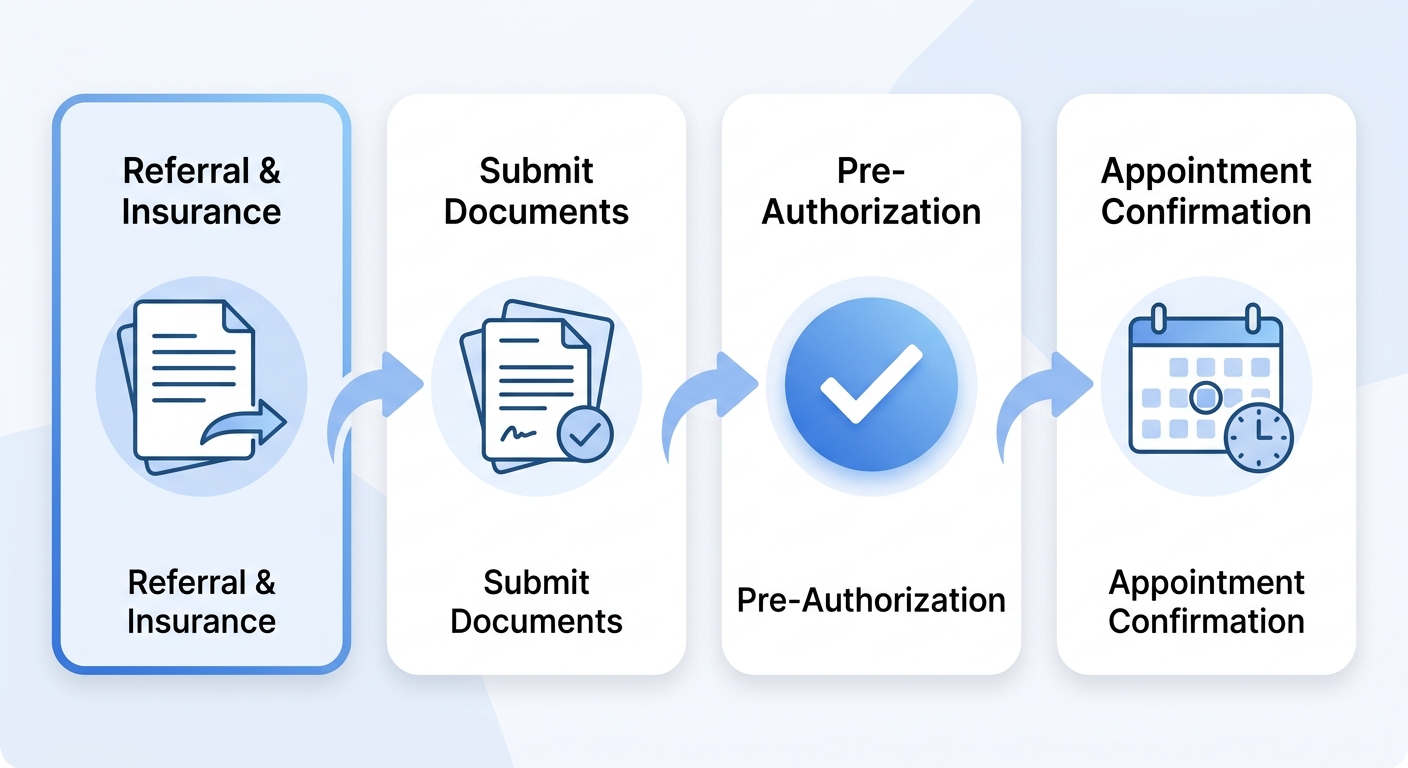
Pre-authorization process from referral to appointment confirmation.
We work with a broad range of coverage types, including personal injury liens, letters of protection, workers’ compensation, and standard commercial and government plans. When insurers require radiology prior authorization, we submit the necessary paperwork and advocate on your behalf. Whether your case involves a lien after an accident in Arizona or a workers’ compensation claim in Texas, our team ensures the proper pre-approval is secured, so you never have to contact your insurance company yourself.
With pre-authorizations handled, you can focus on your appointment and next steps. As Your Trusted Radiology Partner, we invite you to contact us for personalized assistance.
7. Medical Necessity Criteria for MRI: A Closer Look
Medical necessity criteria for MRI scans are the insurer-established standards applied during radiology prior authorization to determine if an MRI order is clinically justified. These criteria tie the imaging request to documented clinical findings such as pain location, duration, and failed conservative therapy — not just a vague complaint of back pain. They also reference evidence-based guidelines like the American College of Radiology (ACR) Appropriateness Criteria, which are widely used as a starting point. However, payers vary in which criteria they accept; a condition approved by one plan may face denial by another. Our team in Phoenix, Arizona works to ensure every prior authorization package includes the precise clinical details that satisfy these medical necessity criteria for MRI. When a denial occurs, we help you contest the decision through the peer-to-peer review radiology process, advocating for the clinical rationale that supports your scan. This information is provided for educational purposes and does not constitute medical or legal advice.
8. The Role of Peer-to-Peer Review in Radiology
Peer-to-peer review in radiology is a structured, voluntary dialogue between a referring physician and a radiologist, triggered when a radiology prior authorization request is denied or flagged, to confirm medical necessity for advanced imaging exams like MRI and CT.
During this review, our fellowship-trained radiologists examine the patient’s clinical history and symptoms alongside evidence-based guidelines such as the American College of Radiology (ACR) Appropriateness Criteria. By applying medical necessity criteria for MRI and other advanced modalities, we help ensure patients receive the most appropriate imaging while avoiding unnecessary radiation exposure. This peer-to-peer process is central to the prior authorization pathway, serving as a collaborative checkpoint that aligns clinical need with patient safety.
This clinical dialogue increases the likelihood of appropriate authorization by aligning each exam with established medical necessity standards. For personal injury cases in Phoenix and across Arizona, thorough peer-to-peer justification supports accurate imaging and court-ready documentation, giving referring attorneys the defensible evidence needed to advance claims.
Ultimately, peer-to-peer review enhances patient safety by confirming clinical necessity for every exam, supporting efficient care coordination and appropriate imaging utilization.
Simplifying Radiology Prior Authorization with the Right Partner
Navigating radiology prior authorization can be time-consuming for providers and patients alike, but the right radiology partner transforms this administrative hurdle into a seamless process. At Arizona Advanced Imaging, we manage the entire pre-authorization process, submitting required documentation for MRI, CT, and other modalities, and verifying insurance coverage to reduce delays.
We also accept personal injury liens and letters of protection, eliminating upfront costs and reducing billing delays for referring offices. Our dedicated staff coordinates with referring physicians to ensure medical necessity criteria for MRI are clearly documented and facilitate peer-to-peer review radiology conversations when payers require additional justification.
With a 24–48 hour report turnaround, we deliver actionable results quickly, complementing our streamlined authorization workflow. We also provide comprehensive patient imaging education through trusted online resources to help patients understand their procedures.
Questions about imaging or scheduling? Call 844-641-2111 or find a location to contact your preferred imaging center.